What Is A Plate Carrier And Does A Veteran Need One In Civilian Life?
To be honest, the answer is probably not. However, that is not the complete solution.
If you’ve worn a plate carrier downrange, you already know what it is. This article isn’t really for you or at least, not that part of it. The more interesting question is the second one: does a veteran actually need one in civilian life?
It’s a question worth taking seriously because the tactical gear market has a way of making everything feel necessary. And for veterans specifically, there’s a version of this conversation that goes beyond gear and touches on something more complicated.
So let’s do this properly.
What A Plate Carrier Actually Is
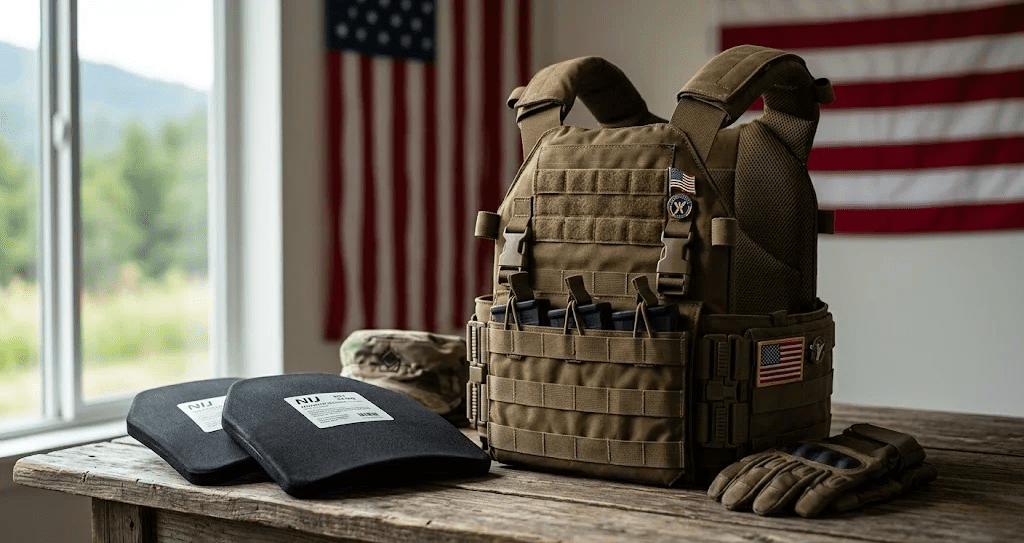
A plate carrier is a vest designed to hold ballistic plates hardened armor inserts that stop rifle rounds. Unlike older flak jackets or soft armor vests, a plate carrier is minimalist by design. It holds the plates, provides MOLLE webbing for attaching pouches and accessories, and stays out of the way as much as possible.
The plates themselves are rated by NIJ (National Institute of Justice) threat levels. Level III stops most rifle rounds. Level IV stops armor-piercing rifle rounds. The plates are heavy a full front and back setup typically adds 15 to 20 pounds before you’ve attached anything else.
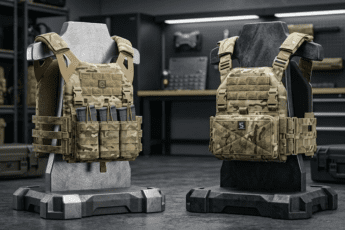
Plate carriers come in two broad categories: military/law enforcement grade, and the growing civilian market. The difference matters. Mil-spec carriers from brands like Ferro Concepts, Crye Precision, and First Spear are built to a standard that budget civilian alternatives are not. And in a product category where the job is stopping bullets, that gap is not trivial.
Who Actually Needs One In Civilian Life
The honest list is shorter than the tactical industry would like it to be.
Armed security professionals working high-risk environments have a legitimate use case. Private security contractors, executive protection teams, and anyone operating in environments where the threat level justifies it yes. A plate carrier is part of the job.
Competitive shooters and training enthusiasts use plate carriers to build functional fitness and practice gear manipulation under realistic conditions. Even if it is not a life-safety kit, it is a valid use case if you take your training seriously and wish to duplicate a functional kit for drills.
When it comes to disaster preparedness, it gets more complicated. In addition to medical supplies, communications equipment, and other emergency supplies, some veterans maintain a plate carrier as part of a larger preparation arrangement. Whether that is appropriate or excessive will depend on your threat assessment, where you are, and how honestly you evaluate the scenarios for which you are truly prepared.
Who Probably Doesn’t
Most veterans in civilian life do not need a plate carrier.
That is simply an honest accounting, not a judgment. There are very few situations in which a plate carrier would have a significant impact in a civilian setting. Even in high-crime regions, daily life does not pose the kind of persistent rifle-caliber threat that plate carriers are intended to counter.
There’s also a practical reality: a plate carrier is not a passive piece of gear. Wearing one in most civilian environments will attract attention, escalate situations, and create problems that didn’t exist before you put it on. Context matters enormously.
The Harder Conversation
Some veterans hold onto plate carriers or feel compelled to acquire them in civilian life not because of a rational threat assessment, but because having the gear provides a sense of security and control that’s hard to get elsewhere.
That’s worth sitting with honestly.
There is information concerning something other than gear if the plate carrier is satisfying a preparedness itch that has not been satisfied since separation. Many veterans find it really challenging to leave a high-threat environment, and even in situations when there is no tactical rationale, the need to remain armed makes psychological sense.
It is not a critique. It is an observation that there are occasionally noteworthy overlaps between the gear and transition conversations.
If You Do Buy One
Go quality or go home. This is not a category where budget shopping makes sense.
For civilian use, the Ferro Concepts Slickster and the Crye Precision JPC are two of the most well-regarded options at different price points. Both are built to real standards, both carry well, and both have earned their reputations through actual use rather than marketing.
Get your plates from a reputable source with proper NIJ certification documentation. Buy a carrier sized for your plates not the other way around. And if you’re planning to run it with weight for fitness purposes, invest time in proper fit adjustment before you start loading it out.
The Bottom Line
A plate carrier is a specific tool for a specific threat environment. In civilian life, the number of people for whom that tool is genuinely necessary is smaller than the tactical gear market would have you believe.
If you have a legitimate use case great. Buy quality, train with it, and know how to use it properly.
You most likely do not need one if you are unsure. And that is okay. The gear doesn’t make the veteran.


Leave a Comment