The True Story Of Alvin York: The Man Who Captured 132 Soldiers And Never Wanted To Be A Hero
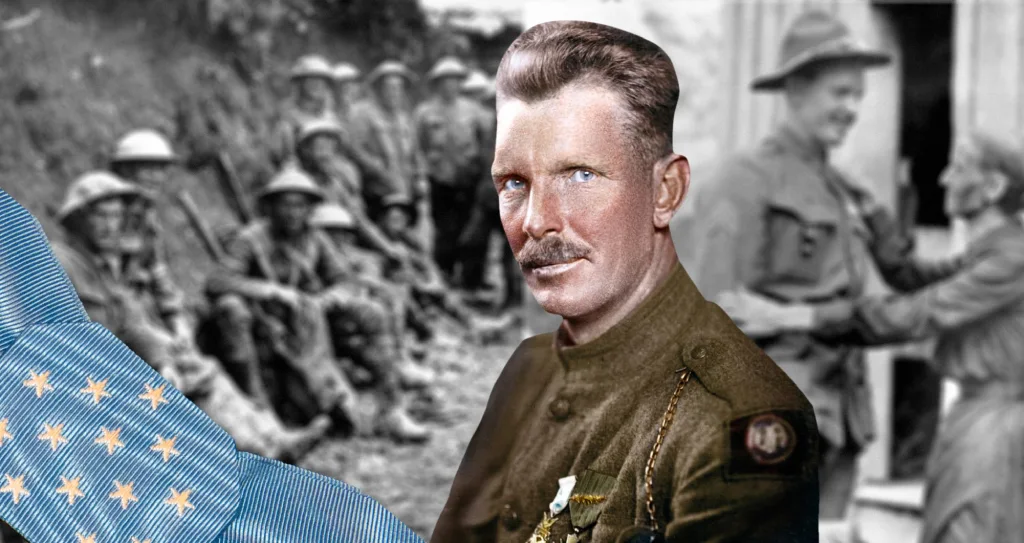
He Didn’t Ask For Glory, But History Had Other Plans
Picture a quiet, deeply religious man from the Tennessee hills. A man who spent his youth hunting squirrels, attending church, and wrestling with his own conscience. A man who, when drafted into war, genuinely did not want to go.
Now picture that same man walking out of a French forest on October 8, 1918, with 132 German prisoners marching behind him.
That’s not fiction. That’s Alvin Cullum York, arguably the most celebrated American soldier of World War I, and one of the most reluctant heroes history has ever produced.
Who Was Alvin York? Background And Early Life
Alvin York was born on December 13, 1887, in Pall Mall, Tennessee, a rural community so remote that formal schooling was nearly impossible. He grew up poor, one of eleven children, in a log cabin without electricity or running water.
What he lacked in formal education, he made up for in marksmanship. By the time he was a teenager, York was one of the best rifle shots in the valley. Hunting wasn’t a hobby; it was survival.
Then, in his mid-twenties, York joined a small evangelical church called the Church of Christ in Christian Union. His faith transformed him completely. He gave up drinking, gambling, and fighting. His new conviction was absolute: killing was wrong.
So when his draft notice arrived in 1917, York filed as a conscientious objector.
His application was denied.
A Soldier Who Questioned The War Before Fighting It
York arrived in France as part of the 82nd Division in 1918. By all accounts, he was quiet, focused, and deeply reluctant. His commanding officers noticed something about him though, a calm and unusual steadiness that most men didn’t carry.
Before deployment into the front lines, York’s battalion commander, Major George Buxton, spent hours talking with him. They read scripture together, debated theology, and discussed the meaning of duty and conscience. Eventually, York came to believe that defending the innocent could be morally justified.
He didn’t make peace with war. He made peace with his role in it.
October 8, 1918: What Actually Happened In That Forest
The Meuse-Argonne Offensive was one of the largest military operations in American history, with over 1.2 million U.S. troops engaged across a brutal, grinding front.
On that October morning, York’s unit was tasked with flanking a German machine gun position that had pinned down American soldiers. A small patrol of seventeen men moved through the forest to get behind the enemy line.
They succeeded. Initially, they surprised a group of German soldiers and captured around 20 prisoners. But then the nearby machine guns turned on them. In the chaos, nine Americans were killed or wounded. The remaining soldiers took cover.
York, a corporal, found himself in the open, directly in front of a line of German machine gunners.
How York Took Down An Entire Unit
Using his instincts as a hunter, York began engaging the gunners by moving carefully, staying low, and picking targets one by one. When a group of six German soldiers charged him with bayonets, he shot them in reverse order, from last to first, just as he had hunted turkeys back home so the front ones wouldn’t scatter and alert the rest.
A German officer, Major Paul Jurgen Vollmer, eventually offered to surrender his entire unit if York would stop firing. York agreed.
When the patrol returned to American lines, York and his remaining comrades brought 132 German prisoners with them. He had used fewer than 30 rounds.
“What I Done Wasn’t So Much”: York’s Own Words
That quote is real, and it tells you everything about the man.
When asked about his extraordinary actions, York consistently deflected credit. He credited God. He credited his training. He refused to accept the idea that what he did made him exceptional.
General John “Black Jack” Pershing called him “the greatest civilian soldier of the war.” York reportedly shrugged.
Back home, he received the Medal of Honor, the Croix de Guerre, and more than 50 other decorations from Allied nations. He was celebrated in newspapers across the country. Hollywood came calling, and York turned them down for years, uncomfortable with the attention and the spotlight.
When he finally agreed to a film adaptation in 1941 (played by Gary Cooper), it was largely because he needed the money to build a school for children in his rural Tennessee community. He donated most of his earnings.
Life After War: The Legacy Alvin York Actually Cared About
York returned to Tennessee and spent the rest of his life building schools, fighting poverty, and advocating for rural education. He never sought political power. He didn’t write a dramatic memoir.
He farmed. He taught. He lived quietly.
His story resonates not just because of what he did in that French forest, but because of who he was before and after it. He is a reminder that heroism rarely announces itself. Often, it arrives wearing doubt, carrying a Bible, and wishing it could be somewhere else entirely.
If you want to express genuine gratitude to those who serve today, this resource on honoring military service offers meaningful ways to say what words sometimes can’t.
Remember The Stories That Actually Matter
History is full of men and women who answered a call they never wanted to receive. Alvin York is one of the most remarkable among them, not because he was fearless, but because he was afraid, full of doubt, deeply principled, and showed up anyway.
Understanding stories like his isn’t just about the past. It’s about recognizing the qualities that still matter: conscience, courage, and the quiet refusal to let humility be mistaken for weakness.
The greatest tribute to someone like Alvin York might simply be remembering him accurately, not as a war machine, but as a man who wanted peace and found himself standing in the middle of history.

Leave a Comment