Best Supplements For Veterans In 2026: What’s Worth Taking And What’s Pure Hype
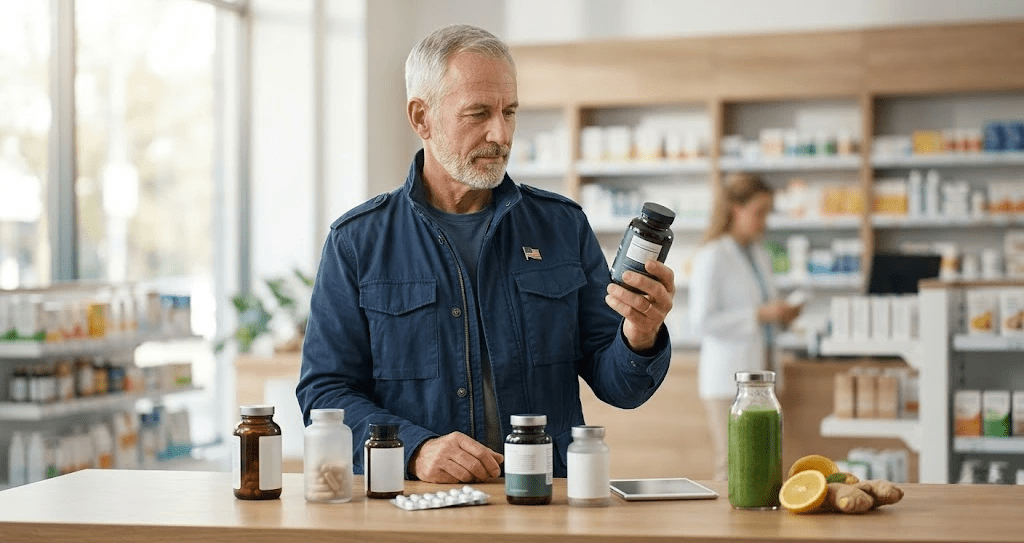
The supplement industry made $50 billion last year. Most of it was marketing.
A 22-year-old would be envious of the wall of items in any supplement store that promise performance, recovery, sleep, joint health, and testosterone levels. The labels are combative. The pictures are carefully chosen before and after. The lists of ingredients are lengthy enough to require a degree in chemistry.
Veterans are a specific target for this industry and not in a good way. The combination of joint wear, sleep problems, chronic pain, and the general sense that your body isn’t quite what it used to be makes for a receptive audience. Businesses are aware of this.
This is a frank assessment of what is actually worth your money, what the study supports, and what you should put on the shelf.
The Short Version First
The majority of supplements do not function as advertised, and only a few offer solid proof.None of them replace sleep, real food, and consistent training. If your foundation isn’t solid, no supplement closes that gap.
With that said for veterans dealing with specific issues common to service, a few things are genuinely worth considering.
What’s Actually Worth Taking
Creatine Monohydrate
Creatine is the one supplement that has enough evidence to be considered “established science.” more than 500 research with peer evaluation. consistent outcomes for all age groups. Proven benefits for strength, power output, muscle retention, and more recently cognitive function and brain health after traumatic brain injury.
For veterans dealing with muscle loss, strength rebuilding, or TBI history, creatine monohydrate is the most evidence-backed option on the market. It’s also one of the cheapest. Five grams a day, any brand that’s third-party tested. No loading phase required. No cycling. Just take it.
The expensive branded versions are not better. Plain creatine monohydrate from a reputable manufacturer is identical.
Vitamin D
You can find out where you are with a blood test. Supplementing makes a noticeable difference if you are deficient, which is statistically likely. Depending on sun exposure and the degree of the deficiency, most adults require 2,000–4,000 IU each day. Take a test first. It is guesswork to supplement without knowing your baseline.
A blood test will tell you where you are. Supplementing makes a noticeable difference if you are deficient, which is statistically likely. Depending on sun exposure and the degree of the deficiency, most adults require 2,000–4,000 IU each day. Get tested first. Supplementing without knowing your baseline is guessing.
Omega-3 Fatty Acids (Fish Oil)
The research on omega-3s is solid for inflammation reduction, joint health, cardiovascular health, and mental health support. For veterans dealing with chronic joint pain from years of load-bearing and impact, or for anyone with a history of depression or PTSD, omega-3s have enough legitimate evidence to be worth taking seriously.
Dose matters: most studies showing meaningful benefits used 2-3 grams of combined EPA and DHA daily not the total fish oil amount on the label. Check the EPA/DHA content specifically. Buy from brands that publish third-party testing for purity, because fish oil quality varies significantly.
Magnesium
Chronically underconsumed through diet. Involved in over 300 enzymatic processes. Depleted further by stress and if service didn’t produce stress, nothing will.
Fatigue, anxiety, cramping in the muscles, and poor sleep quality are all caused by magnesium shortage. The forms that are more absorbed are magnesium glycinate and magnesium threonate. Many people report better sleep quality within a week or two after taking it before bed. It’s inexpensive, low-risk, and the downside of trying it is essentially zero.
Protein Powder (If Needed)
Not a supplement in the traditional sense, but worth addressing because it’s the most commonly purchased powder in this category.
If you’re hitting your protein targets through food roughly 0.8 to 1 gram per pound of bodyweight you don’t need it. If you’re not, a quality whey or plant-based protein powder is a convenient and effective way to close the gap. Nothing less, nothing more. Avoid giving the brand too much thought.
What’s Pure Hype
Testosterone Boosters
The marketing is targeted directly at veterans and older men, and it works which is why this category generates enormous revenue. The products themselves, almost universally, do not.
The ingredients in most testosterone boosters (ashwagandha aside, which has modest evidence for stress cortisol reduction) have not demonstrated clinically meaningful testosterone increases in healthy men in peer-reviewed research. If you have genuinely low testosterone, that’s a medical conversation with a doctor not a supplement store decision.
BCAAs (Branched-Chain Amino Acids)
If you’re eating enough protein, you’re already getting BCAAs. Supplementing them on top of adequate protein intake adds nothing measurable. The research that made BCAAs popular was largely conducted on protein-deficient subjects. Fix your protein intake first, and BCAAs become a very expensive redundancy.
Pre-Workout Formulas
Caffeine works. It genuinely improves performance, focus, and endurance. A pre-workout that’s mostly caffeine will do something real.
Everything else in the proprietary blend the beta-alanine that makes your skin tingle, the citrulline at under-dosed levels, the “focus matrix” is mostly theater. If you want the benefit of caffeine before training, a cup of coffee costs a fraction of the price and delivers the same active ingredient.
Collagen Supplements
Trendy, expensive, and significantly oversold for joint health. Your body doesn’t absorb collagen peptides and route them directly to your joints digestion doesn’t work that way. Vitamin C, adequate protein, and resistance training do more for connective tissue health than collagen powder.
One Thing That Matters More Than All of This
Third-party testing.
In the US, supplements are not subject to the same regulations as medications. Before selling their goods, manufacturers are not obliged to demonstrate that they contain what the label claims. Products containing improper dosages, undisclosed components, and occasionally prohibited drugs have been discovered in numerous studies.
For veterans who are subject to drug testing or just don’t want to put unknown things in their body buy only from brands that carry NSF Certified for Sport or Informed Sport certification. These programs test products independently and verify label accuracy. It is not a promise, but it is the closest thing to one.
The Bottom Line
Creatine, Vitamin D, omega-3s, and magnesium if your diet and bloodwork indicate you need them are worth your money and have real evidence behind them. Everything else deserves skepticism until proven otherwise.
The supplement industry is very good at selling hope. You’ve dealt with worse than a slick label. Apply the same critical thinking here that you’d apply anywhere else, and you’ll spend less money and get better results.


Leave a Comment