Adaptive Fitness For Veterans With Service-Related Injuries: Programs That Don’t Quit On You
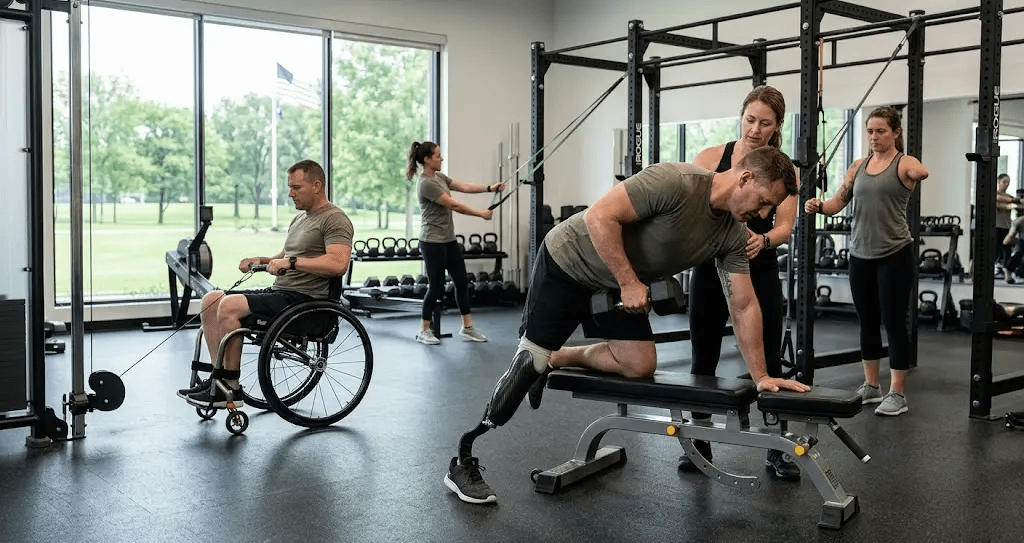
Service breaks the body in specific ways bad knees, torn shoulders, spinal compression, TBI, amputations. Standard gym programs ignore all of that.Adaptive fitness for veterans with service-related injuries takes a completely different approach.It meets you where your body actually is not where it used to be and builds from there without apology.
Why Regular Fitness Programs Fail Injured Veterans
Most commercial fitness programs assume a fully functioning body. Therefore, when a veteran with a fused ankle or a missing limb tries to follow a standard program, they hit a wall immediately. That failure isn’t personal it’s a design flaw in the program itself.
Furthermore, the mental weight of injury adds another layer. Many veterans tie their identity to physical performance. When that performance drops, motivation follows. As a result, they stop training entirely which makes everything worse over time.
Adaptive Fitness For Veterans: Programs That Actually Work
The Adaptive Training Foundation (ATF)
The ATF focuses entirely on athletes with physical disabilities and injuries. Furthermore, they’ve worked with hundreds of veterans to build strength, mobility, and confidence after serious physical loss. Their programming adapts every movement to what your body can do right now not what it should theoretically do.
That said, ATF isn’t just for amputees. Veterans with chronic pain, limited range of motion, or neurological injuries benefit just as much from their approach.
VA Adaptive Sports Program
The VA runs adaptive sports programming at dozens of facilities nationwide.In fact the National Veterans Wheelchair Games and the VA Winter Sports Clinic draw thousands of participants every year.These programs prove that competitive, high-intensity training remains possible after serious injury.
Moreover, VA adaptive sports connect veterans with peers going through the same challenges. That community piece matters more than most people admit.
Training Modalities That Work For Injured Veterans
Seated And Chair-Based Strength Training
Seated training isn’t a lesser version of real training it’s a different tool. Veterans with lower limb injuries or balance issues build serious upper body strength through seated rows, overhead press, and adapted bench movements. Therefore, don’t skip strength work just because standing movements are off the table.
Aquatic Therapy And Water-Based Fitness
Water reduces joint load by up to 90 percent. As a result, veterans with knee replacements, spinal injuries, or severe arthritis can train hard in a pool without the pain that land-based movement causes. Beyond that, aquatic resistance builds functional strength that carries over to daily life.
Adaptive CrossFit And Functional Fitness
Several CrossFit affiliates now offer adaptive programming specifically for veterans. Coaches scale every movement to the individual athlete. Furthermore, the intensity stays high which matters to veterans who don’t want a watered-down workout just because they’re injured.
Key Principles For Training Around Service Injuries
Work With Pain, Not Through It
There’s a difference between discomfort from effort and pain from damage. Veterans especially those trained to push through everything often blur that line.However, training into joint damage or nerve pain accelerates long-term decline. Listen to your body and adjust accordingly.
Prioritize Movement Quality First
Before adding weight or intensity, focus on moving well. In fact, most sports medicine professionals working with injured veterans say that movement quality improvements alone reduce pain significantly within weeks. Overall, slow progress beats re-injury every single time.
Find A Coach Who Gets It
A general personal trainer without adaptive experience can cause real harm. Therefore, seek out coaches certified in adaptive fitness or those with direct veteran experience. The National Academy of Sports Medicine and NSCA both offer adaptive fitness certifications those credentials matter.
Final Thoughts
Adaptive fitness for veterans with service-related injuries isn’t a consolation prize it’s a serious,effective approach to lifelong strength and health. However, finding the right program and the right coach makes all the difference.Therefore, don’t settle for a program that ignores your injury history. Your body carried you through service it deserves training that carries it forward now.


Leave a Comment