Alwyn Cashe Burned Himself Pulling His Crew Out And Waited 16 Years For The Country To Notice
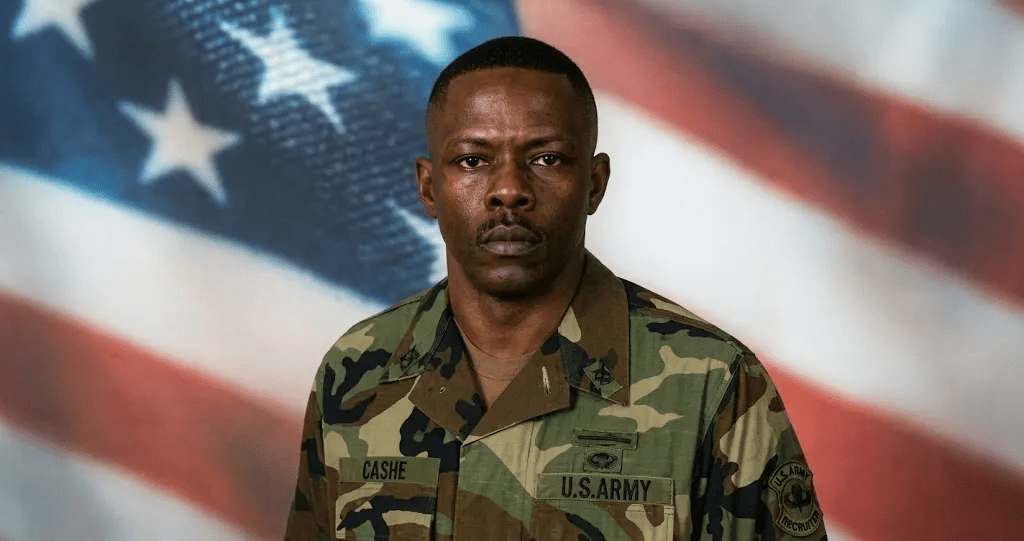
His uniform was already on fire when he went back in.
Staff Sergeant Alwyn Cashe had just survived an IED blast in Iraq, soaked in fuel, flames spreading across his body, and he still turned around and pulled his soldiers out of that burning vehicle, one by one, six times.
He died from his burns three weeks later. He was 35 years old.
The country he served did not give him its highest military honor until 16 years after his death.
This is the story of what he did, and why it took so long for anyone in power to officially say it mattered.
Background Of Alwyn Cashe
Alwyn Lewis Cashe was born on July 3, 1971, in Sanford, Florida. He grew up in a place where not many paths felt open, but he found his in the Army. He enlisted and rose to the rank of Staff Sergeant in the 3rd Infantry Division.
Those who served with him describe a soldier who was calm under pressure and genuinely devoted to his platoon. He was not chasing medals. He was not performing. He was the kind of man who showed up every day and made sure the people around him felt steady.
By 2005, he was serving in Iraq during Operation Iraqi Freedom. His unit was conducting patrols in Samarra, a city that was deeply unstable at the time. The work was dangerous. Every road carried risk.
The Heroic Incident
On October 17, 2005, a Bradley Fighting Vehicle carrying Cashe and his soldiers was hit by an improvised explosive device. The fuel cell ignited. The vehicle caught fire almost immediately.
Cashe was soaked in fuel himself. He was already burning.
He did not run. He pulled soldiers out of the vehicle, one by one, as the flames spread across the metal and into everything around it. He went back multiple times. His uniform was on fire. His skin was burning. He kept going.
He managed to pull six of his soldiers to safety. Six men who would have died inside that vehicle.
Cashe suffered burns over 72 percent of his body. He was evacuated and treated, but the injuries were too severe. He died on November 8, 2005, just weeks after the attack. He was 35 years old.
The soldiers he saved lived. That was the outcome he chose.
For more on the lives shaped by extraordinary military service in conflicts often overlooked by mainstream coverage, this account of SFC Jorge Otero Barreto offers a powerful parallel of a decorated soldier whose story also took decades to fully reach the public.
Aftermath And The 16-Year Recognition Delay
Cashe was initially awarded the Silver Star, the third-highest military decoration. That alone says something significant, because the Silver Star is not a small thing. But many people who reviewed his actions believed the Silver Star did not match what actually happened on that road.
Advocates pushed for years to have his award upgraded to the Medal of Honor. The process was slow. Military award upgrades require documentation reviews, command endorsements, and congressional action. Bureaucracy does not move at the speed of a burning vehicle.
His family and fellow soldiers kept pushing. Veterans’ advocates kept the pressure on. Year after year, the case moved through channels. It was reviewed. It stalled. It was reviewed again.
A detailed account of the documentation process and advocacy efforts surrounding his case can be found through this archived source, which captures how the recognition effort unfolded in the final stages.
Sixteen years after his death, on December 16, 2021, President Joe Biden awarded Alwyn Cashe the Medal of Honor posthumously. His family received it in a ceremony at the White House.
He became the first Black soldier to receive the Medal of Honor for actions in the post-September 11 conflicts.
Military Impact And Legacy
The delay in Cashe’s recognition opened a larger conversation about how the military handles Medal of Honor nominations, particularly for soldiers from underrepresented communities. Historians and veterans’ groups pointed to a documented pattern in which Black soldiers were historically passed over for the nation’s highest military honor during multiple conflicts.
That is not a small point. It connects Cashe’s story to a much longer thread of unrecognized sacrifice. It does not take anything away from what he did. It adds weight to why his recognition mattered so much to so many people.
His case helped push renewed attention toward systematic award review processes, and it reminded the public that the official record of heroism is sometimes written slowly, and sometimes written wrong the first time.
Recognition And Historical Importance
The Medal of Honor ceremony in December 2021 was attended by surviving soldiers Cashe pulled from that vehicle. Some of them had spent years advocating for his upgrade. They knew exactly what he had done for them.
The recognition matters beyond the ceremony itself. Cashe’s name is now listed among Medal of Honor recipients permanently. His story is part of the record. Schools, military installations, and veteran communities have worked to make sure his name does not fade again.
Fort Irwin, California named a street in his honor. His hometown of Sanford, Florida has honored him publicly. His family, who waited through 16 years of uncertainty and bureaucratic silence, watched the country finally say, in plain terms, that what he did was the definition of valor.
Lessons From The Story
Cashe’s story carries a few things worth sitting with.
First, real courage often happens in moments no one plans for. There was no time to think. He was already burning when he went back. That is not training. That is character.
Second, the delay in his recognition is a reminder that honor is not always delivered on time. Systems fail. Processes slow. But persistence from families, advocates, and fellow veterans can eventually correct those failures.
Third, his story belongs to everyone who wears a uniform, regardless of background. The willingness to walk back into a burning vehicle for the people next to you does not belong to one era or one group. It is the oldest thing in military service.
Frequently Asked Questions
Who was Alwyn Cashe? Alwyn Cashe was a U.S. Army Staff Sergeant who served in the 3rd Infantry Division during Operation Iraqi Freedom. He died in 2005 from injuries suffered while rescuing soldiers from a burning vehicle in Iraq.
What did he do in Iraq? After his Bradley Fighting Vehicle was struck by an IED and caught fire, Cashe repeatedly entered the burning vehicle to pull out his soldiers, despite being on fire himself. He saved six soldiers before succumbing to burns covering 72 percent of his body.
How many soldiers did he save? Cashe pulled six of his fellow soldiers from the burning vehicle, saving their lives at the cost of his own.
Why did recognition take 16 years? The military awards process, especially for posthumous Medal of Honor upgrades, involves extensive documentation, review, and congressional action. Advocates had to push the case through multiple levels of military and government bureaucracy over more than a decade before the upgrade was finalized.
What medal did he receive? Cashe was originally awarded the Silver Star. In December 2021, President Biden upgraded that award to the Medal of Honor, the nation’s highest military decoration.
Was Cashe the first Black soldier to receive the Medal of Honor for post-9/11 service? Yes. When he received the Medal of Honor posthumously in 2021, Alwyn Cashe became the first Black service member to be awarded the Medal of Honor for actions during the post-September 11 conflicts.
Final Thought
Alwyn Chase did not burn for recognition. He burned because six of his soldiers were still inside that vehicle and he was the one standing outside it. The country took 16 years to catch up to what he did in a matter of seconds.
His story is one of dozens that deserve this kind of attention. If it moved you, explore more real-life military hero stories and the untold sacrifices that rarely make headlines but shaped the people who served alongside them.

Leave a Comment