Vernon Baker The Black Hero WWII Tried To Forget
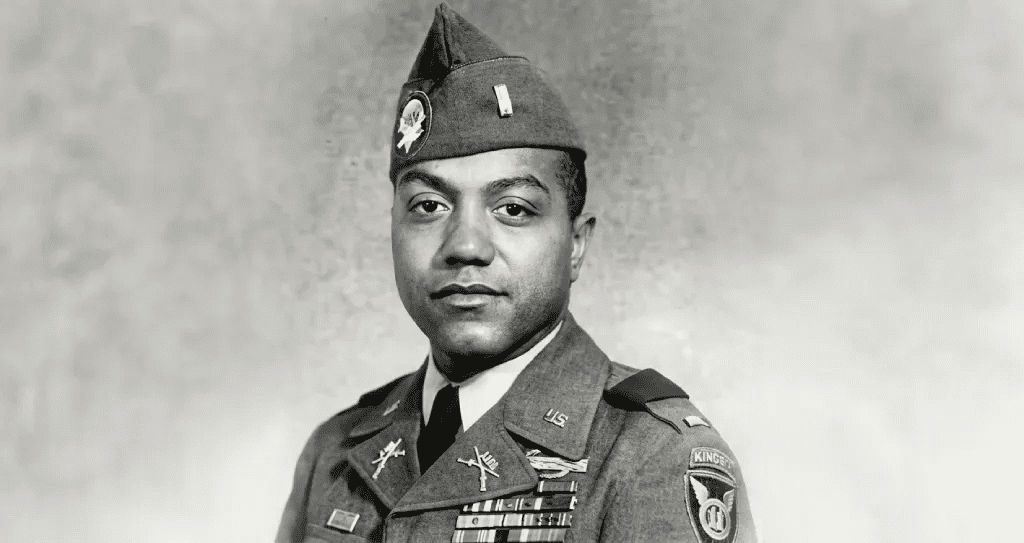
His officer had retreated. His backup was gone. The German guns were still active. And yet Vernon Baker kept moving forward, one position at a time, in the dark, with nothing but his rifle, his grenades, and a kind of courage that most people will never have a name for.
By morning he had destroyed 12 enemy machine gun nests, two observation posts, and four dugouts. He had killed more than 25 soldiers. He had held the hill through the night and guided his surviving men to safety.
A Hero America Chose To Ignore
Imagine walking off a battlefield having just done something that would make your country famous. You killed 25 enemy soldiers. You destroyed more than a dozen military positions. You held a hillside through the night when your own commanding officer abandoned you. You brought your men home alive.
Now imagine coming home to silence.
No ceremony. No headline. No phone call from Washington. Just the sound of a country choosing, deliberately and quietly, to look away.
That was Vernon Baker’s life after World War II. Not because he failed his country. But because his country was not ready to acknowledge what a Black man had done.
His story is not just history. It is a reckoning.
A Boy Nobody Wanted
Vernon Baker was born on December 17, 1919, in Cheyenne, Wyoming. Before he was old enough to start school, he had already lost the two people who were supposed to protect him most. Both of his parents died in a car accident when he was just four years old.
He was sent to live with his grandparents. His grandfather, by most accounts, was cold and distant, a man who made young Vernon feel like a burden rather than a blessing. There was no warmth waiting for him. No sense that the world had plans for him.
He grew up poor and Black in an America that offered few second chances and even fewer first ones.
When he first tried to enlist in the Army, the recruiter told him there were no openings for men like him. Black men were not wanted. Baker walked away, found another office, and tried again. This time he got in.
That moment matters. Because what he did with that chance would one day change what America owed him and never paid back on time.
The Night At Castle Aghinolfi That Nobody Celebrated
On April 5 and 6, 1945, in northern Italy near a fortified German stronghold called Castle Aghinolfi, something happened that should have been splashed across every newspaper in America.
First Lieutenant Vernon Baker led a small patrol toward heavily defended German positions along the Gothic Line. What followed was not a burst of reckless courage. It was methodical, fierce, and extraordinary. Baker moved through the terrain destroying one enemy position after another. He took out 12 machine gun nests, two observation posts, and four dugouts. He killed more than 25 German soldiers.
He was 25 years old.
And then, at the most critical moment, his white commanding officer ordered a retreat and pulled back without ensuring Baker’s unit was covered. Baker and his men were left in the open. Rather than panicking, Baker held the position through the entire night and guided what remained of his unit to safety by morning.
Think about what that means for a moment. The man trusted with command abandoned the field. The enlisted Black soldier stayed, held the line, and brought people home.
Any white soldier in that position would have been celebrated as a national hero the next morning. His name would have been in every paper. His face would have been on posters.
For Baker, there was nothing.
Fighting Two Wars At Once
To understand why Vernon Baker’s story was buried, you have to understand what the United States military looked like in 1945. It was a segregated institution. Black soldiers served in separate units. They were assigned the least desirable roles. They were commanded by officers who, in many cases, did not believe they were capable of real combat.
The African American soldiers WWII produced were fighting on two fronts every single day. One front was in the hills and trenches of Europe and the Pacific. The other was inside the very Army that handed them a rifle and told them to go die for a country that would not let them eat at the same lunch counter as their white comrades.
The Buffalo Soldiers knew this. The Tuskegee Airmen knew this. Every man in the 92nd Infantry Division, where Baker served, knew this. They had to be twice as brave just to be considered half as worthy.
And still they fought. Still they bled. Still they came home to a country that shook their hand with one hand and turned its back with the other.
Baker received the Distinguished Service Cross after Italy, which was a significant honor. But it was not the Medal of Honor his actions had clearly earned. Everyone involved knew why. No one said it out loud.
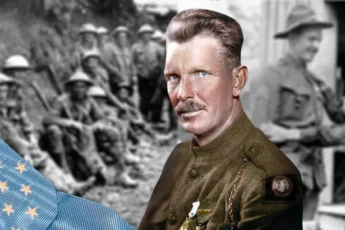
For a look at how individual battlefield heroism during WWII was recognized and celebrated when the soldier was white, the story of Alvin York offers a striking comparison. You can read that full account at Veteran Diaries. Side by side, the two stories reveal everything about who America chose to remember.
Fifty Two Years Of Silence
After the war, Baker did not write a memoir. He did not give speeches. He did not hold press conferences or sue the government or demand what was owed to him.
He drove trucks. He worked at the post office. He re-enlisted in the Army and served for another two decades without fanfare. He eventually retired to the mountains of Idaho, a quiet town called St. Maries, far from everything.
He lived with what he knew. He lived with the weight of an act of heroism that his country had decided was not worth celebrating.
There is something deeply painful about a man like that. Not bitter in a loud way. Just quietly carrying something enormous that no one else seemed willing to help him hold.
In 1993, the U.S. Army commissioned a formal study to ask a question that should not have needed asking. Had Black soldiers in World War II been unfairly denied the Medal of Honor because of their race?
The answer was yes.
Seven names were identified. Seven men whose courage had been documented, witnessed, and quietly filed away. A formal review was ordered. The medals were approved.
On January 13, 1997, President Bill Clinton stood at the White House and presented the Medal of Honor to seven men who had earned it half a century earlier.
Vernon Baker was the only one still alive to receive it in person.
He was 77 years old.
Six families stepped forward that day to accept medals on behalf of men who had died waiting for their country to do the right thing.
The Look On His Face Said Everything
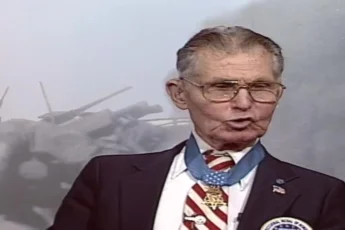
There are photographs from that ceremony. Baker in his suit, standing straight, accepting the medal from the President of the United States. His expression is not what you might expect. It is not triumphant. It is not joyful in the way a young man receiving an award might look.
It is the face of someone who knew the full cost of the wait. Someone who had carried the truth for decades without asking anyone else to carry it with him. Someone who understood, perhaps better than anyone in that room, exactly what 52 years of silence had meant.
He thanked the people around him. He was gracious. He was measured.
But when a reporter asked him how he felt, he reportedly said something that stayed quiet in the newspapers but has echoed ever since. He said he wished the others could have been there.
He was not thinking about himself. He was thinking about the men who did not make it to that room.
What His Legacy Demands From Us
Vernon Baker died on July 13, 2010, in St. Maries, Idaho. He was 90 years old. He was buried at Arlington National Cemetery with full military honors, finally given in permanence what had been withheld for most of his lifetime.
His story belongs to a much larger conversation about the overlooked war heroes USA produced in staggering numbers. Men and women whose courage was real, documented, and witnessed, but whose race made them inconvenient to celebrate in a country still pretending it treated everyone equally.
The history of Black Medal of Honor recipients WWII is not a side story. It is not a correction to the main narrative. It is the main narrative, and we have been reading an incomplete version of it for 80 years.
Baker once said he did what he was supposed to do and the rest was up to them. That patience, that dignity in the face of enormous injustice, is perhaps the most powerful part of his legacy. He did not need the medal to know what he had done. He had always known.
But we needed to give it. Because a nation that ignores its heroes based on the color of their skin is a nation still fighting a war inside itself.
His story asks us to look at that honestly. Not comfortably. Honestly.
Frequently Asked Questions
Who Was Vernon Baker
Vernon Baker was an African American First Lieutenant who served in the U.S. Army’s 92nd Infantry Division during World War II. He is best known for single-handedly destroying multiple enemy positions near Castle Aghinolfi, Italy, in April 1945, in one of the most remarkable solo combat performances of the entire war.
Why Was His Recognition Delayed
A formal Army study in 1993 confirmed that Black soldiers had been systematically excluded from Medal of Honor consideration during World War II due to racial discrimination. Baker was among seven men identified in that review as deserving the honor they had been unjustly denied.
What Exactly Did Vernon Baker Do In WWII
During a two-day engagement in April 1945, Baker destroyed 12 German machine gun positions, two observation posts, and four enemy dugouts. He killed more than 25 soldiers and held his position through the night after his commanding officer retreated without him, ultimately guiding his unit to safety by morning.
When did He Receive The Medal Of Honor
Baker received the Medal of Honor on January 13, 1997, at a White House ceremony hosted by President Bill Clinton. He was 77 years old and the only one of the seven recipients still living to accept the award in person.
What happened To Vernon Baker After The War
Baker returned to civilian life and held various working-class jobs before re-enlisting and serving for another twenty years. He eventually retired to St. Maries, Idaho, where he lived quietly until his death on July 13, 2010. He was buried at Arlington National Cemetery with full military honors.
Read The Stories That Were Never Meant To Survive
Vernon Baker’s story is one of many that history nearly swallowed whole. There are others out there, Black Medal of Honor recipients, overlooked war heroes, African American soldiers WWII sent into battle with less and asked to give more than anyone else, whose names most people will never hear.
That silence is not an accident. And breaking it takes deliberate effort.Explore more untold stories from the men and women who gave everything at Veteran Diaries. Share this article with someone who needs to know Vernon Baker’s name. Because remembering is the one thing history cannot take back from us.
Leave a Comment