John Basilone The Marine Who Fought At Guadalcanal And Lwo Jima
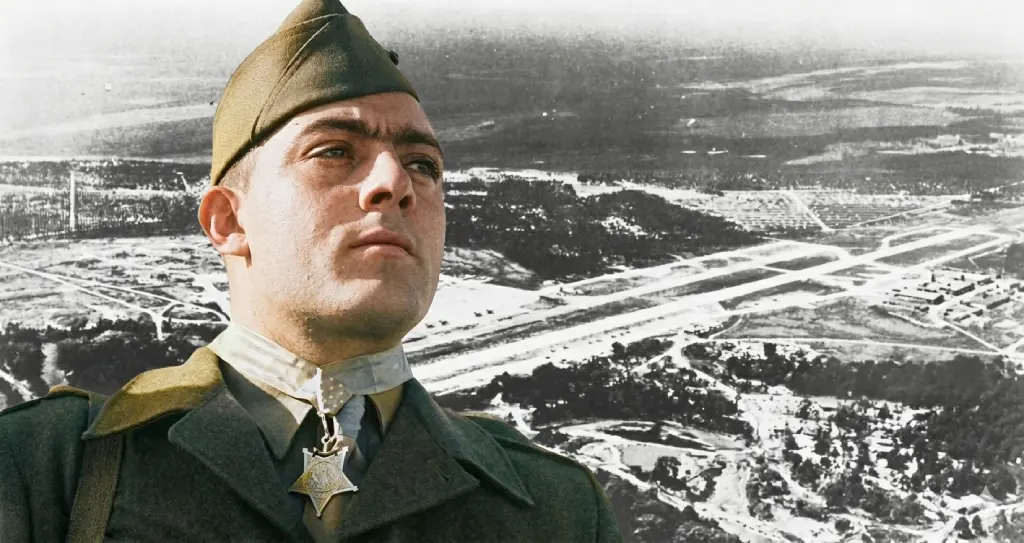
John Basilone was not a character from a movie. He was a real man who grew up on real streets in New Jersey, who laughed at dinner tables and got nervous around girls and drove a truck for a living. He was ordinary in every way that matters, right up until the moment he wasn’t.
The story of John Basilone at Guadalcanal and Iwo Jima is not just a war story. It is a story about what a human being is capable of when everything falls apart around them and they choose to keep moving anyway.
Early Life
John Basilone was born on November 4, 1916, in Buffalo, New York, and raised in Raritan, New Jersey as the sixth of ten children. His father was an Italian immigrant who worked with his hands. Their home was loud, crowded, and full of life.
John was restless from the beginning. Not troubled, just too alive for quiet rooms. At 18, he signed up for the U.S. Army and spent three years stationed in the Philippines. He came back leaner, sharper, and somehow even less suited to sitting still.
He drove trucks. He made deliveries. He tried to be a civilian and discovered he was not particularly good at it.
By 1940, he walked into a Marine Corps recruiting office. He had no way of knowing that decision would one day be carved into monuments.
The Night the Jungle Held Its Breath
To understand what Basilone did on Guadalcanal, you have to understand what that island was.
It was August 1942. The jungles were thick enough to block the sun, hot enough to make breathing feel like an effort, and filled with a Japanese force that had been ordered to hold the island at any cost. The Marines had landed to take it. Neither side was going to back down easily.
On the night of October 24 moving into October 25, a massive Japanese assault crashed into the Marine defensive line near Henderson Field. Basilone was a sergeant commanding a section of heavy machine guns. What he faced that night was not a skirmish. It was a wave. Then another wave. Then another, each one pushing harder than the last, all of them in the dark, all of them screaming.
His ammunition ran out. He ran through open fire to get more, carrying it back through the jungle while bullets split the air around him. His guns jammed under the heat and stress of continuous firing. He cleared them by hand, fingers working in the dark, getting them back online before the next wave hit. One by one his men fell around him, wounded or worse. At points during those fifteen hours, Basilone was essentially alone, holding a section of the line by himself, keeping the guns moving because stopping meant the airfield fell and the airfield falling meant thousands of men died.
By sunrise, the assault was broken. Roughly 3,000 Japanese soldiers had been stopped. The airfield held.
Basilone stood in the morning light, covered in dirt and someone else’s blood, and the war continued.
He was awarded the Medal of Honor for that night. When they put it around his neck, he stood very still and said very little. People who knew him said he never quite knew what to do with the attention.
The Weight of Being a Symbol
The Marine Corps brought him home. America needed heroes it could see, and John Basilone was suddenly that name.
He toured cities. Crowds gathered in the thousands. Women asked for his autograph. Men shook his hand with two hands, the way people shake hands when they mean it deeply. Newspapers ran his face on front pages.
He met Sergeant Lena Riggi on a base in California. She was strong, direct, and completely unimpressed by his celebrity, which was probably exactly why he fell for her. They married in July 1944. For a brief window, life was something close to beautiful.
And then he asked to go back.
Not because he was ordered to. Not because he had something to prove. He asked because he felt wrong standing on stages in pressed uniforms while men he knew were still dying on beaches he had already seen. He told people close to him that the war felt unfinished, and he could not rest until it was.
Lena understood. She was a Marine too. She let him go.
There is something almost unbearable about that image. A new wife watching her husband walk back toward the thing that should have already killed him once.
Soldiers throughout history have carried that same specific weight of voluntary return. It echoes in the stories of other warriors who chose danger over safety, like the Delta Force soldiers who held their ground in Somalia when they could have retreated. Basilone belonged to that same rare category of men.
The Last Morning
February 19, 1945.
The beach at Iwo Jima was black volcanic sand, and it swallowed boots whole. The Japanese had spent months turning that island into a fortress of underground tunnels, buried bunkers, and gun positions built specifically to kill Marines from every angle at once. The moment the landing craft opened, men started dying.
Basilone was a gunnery sergeant now. He hit the beach with his unit and almost immediately they were pinned down. Fire was coming from multiple directions. Men were dropping. The advance had stopped before it truly began.
He did what he always did.
He moved.
He guided his men along the beach under direct fire, reading the chaos the way only someone who had survived Guadalcanal could read it. He found the positions. He directed fire. He personally attacked and destroyed a Japanese blockhouse that had been stopping the advance completely, clearing the path forward for the men behind him.
Then a mortar round found him.
John Basilone died on that beach on February 19, 1945. He was 28 years old. He had been in Iwo Jima for less than a day.
Lena got the telegram at home in California. She had known, somewhere deep and quiet, that this was always how it would end. That did not make the telegram any easier to open.
What He Left Behind
They named a Navy destroyer after him. They built a bronze statue in Raritan that shows him mid-stride, rifle in hand, moving forward the way he always moved forward. His hometown has held an annual parade in his honor for decades, one of the longest tributes to a single soldier anywhere in America.
He was posthumously awarded the Navy Cross for Iwo Jima, making him one of the very few Marines in history to hold both the Medal of Honor and the Navy Cross. The Marine Corps still teaches his story, not as legend, but as example.
HBO’s The Pacific brought him back to life for millions of viewers in 2010, and something remarkable happened. People who had never heard of him watched and then searched for him and then sat quietly for a while afterward.
Because his story does something to people.
Why His Story Still Matters
John Basilone was not born special. He was born sixth in a loud Italian-American family in a small New Jersey town, and he spent years driving trucks and wondering what his life was supposed to become.
He found out on a jungle island at three in the morning with ammunition running out and his men falling around him.
What he found was not some hidden superhero capacity. It was something quieter and more difficult than that. It was the ability to keep choosing forward when every instinct said stop. It was the ability to feel fear, and to keep moving anyway, and to do it again the next day, and the day after that.
He was a Medal of Honor Marine, a Guadalcanal battle hero, a central figure in Iwo Jima Marines history, and one of the most human stories to come out of all of WWII.
His wife Lena lived until 1999. She never remarried. She kept his medals in a box and took them out sometimes and held them.
That is the part of the story that stays with you longest.
Leave a Comment