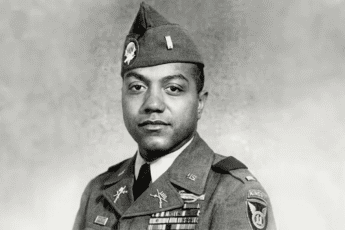
Desmond Doss Saved 75 Lives On Hacksaw Ridge Without Ever Picking Up A Gun
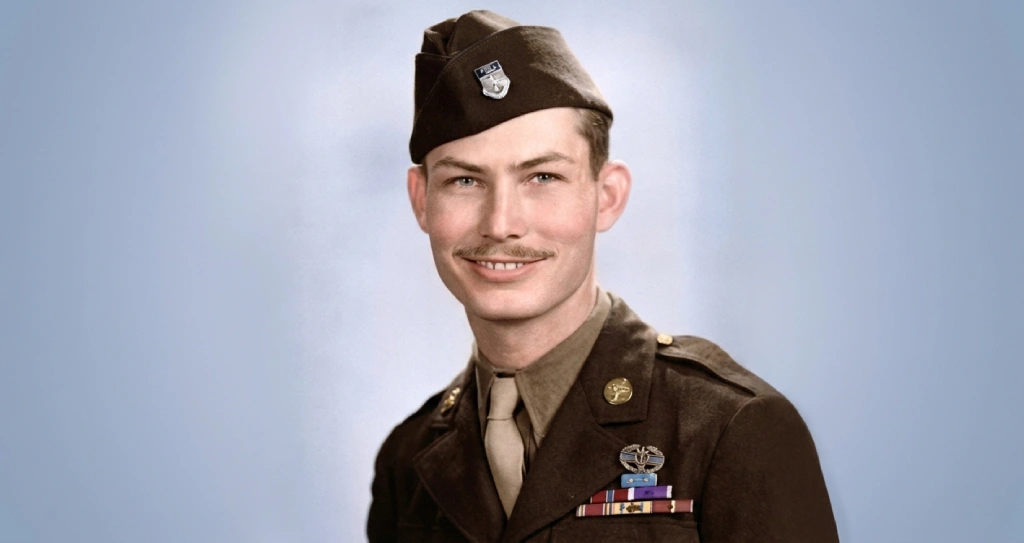
In one of the most remarkable acts of individual bravery in American military history, a soft-spoken farm boy from Virginia climbed a 400-foot cliff in the middle of a horrific battle and refused to leave without saving his fellow soldiers. No weapon. No cover fire. Just rope, raw courage, and an unshakable belief that every life mattered.
By the time the Battle of Hacksaw Ridge was over in May 1945, Desmond Doss had rescued an estimated 75 wounded men from the battlefield on the Maeda Escarpment in Okinawa, Japan. Each time he lowered another soldier safely down the ridge, he reportedly whispered the same quiet prayer: “Lord, help me get one more.
Who Was Desmond Doss?
Born on February 7, 1919, in Lynchburg, Virginia, Desmond Doss grew up in a deeply religious Seventh-day Adventist household. His faith shaped everything about him, including a firm commitment to two principles: he would never work on the Sabbath, and he would never take a human life.
When World War Two began and the United States entered the fight, Doss did not seek exemption from service. He wanted to serve his country. He simply could not, in good conscience, carry a weapon. So he enlisted as a conscientious objector and trained as a combat medic, the only role that allowed him to serve without ever holding a gun.
His fellow soldiers did not understand him at first. They called him a coward. Some tried to have him discharged. His commanding officers considered him a liability. But Doss never fought back, never wavered, and never gave up on the men who doubted him.
He showed them who he really was at a place called Hacksaw Ridge.
What Happened at Hacksaw Ridge?
The Maeda Escarpment, nicknamed “Hacksaw Ridge” by American troops, was a steep 400-foot plateau on the island of Okinawa. Japanese forces had fortified it heavily and were defending it with machine guns, grenades, and artillery. American soldiers climbed steel cargo nets to reach the top and were immediately met with devastating fire.
On May 5, 1945, after a brutal assault, the order came to retreat. Hundreds of soldiers had been left wounded on the exposed plateau above. Most men pulled back. Doss refused to go.
Alone on a ridge swarming with Japanese soldiers, he crawled from man to man in the darkness, applying field medicine to wounds and dragging soldiers to the edge of the cliff. He fashioned a rope and lowering system and brought each man down to safety, one by one.
By the time he finally descended, he had saved an estimated 75 lives in a single night. Military commanders initially reported the number as 100. Doss himself was characteristically modest, and the final documented count settled at 75.
He was wounded multiple times over the following days, still refusing to leave the battlefield until other soldiers were treated first. He suffered a grenade blast to his legs and a sniper’s bullet to his arm, and still managed to give his own litter to another injured soldier and walk to the aid station under his own power.
A Faith That Could Not Be Shaken
What makes Doss’s story so compelling is not just the physical bravery. It is the absolute consistency of his character under the worst possible pressure.
He prayed before every mission. He kept his Bible with him throughout the war. When his unit once refused to go into battle without him because they had come to believe his presence protected them, it was the same man they had once tried to push out of the Army.
His faith was not a performance. It was the engine behind every action he took.
For further reading on soldiers whose convictions defined their service, this story of Sergeant First Class Randy Shughart offers another powerful look at courage under fire
Recognition That Was Long Overdue
On October 12, 1945, President Harry S. Truman presented Desmond Doss with the Medal of Honor, making him the first conscientious objector ever to receive America’s highest military decoration.
Truman reportedly told him: “I consider this a greater honor than being president.”
Doss was also awarded the Bronze Star with two Oak Leaf Clusters and three Purple Hearts. He was honorably discharged after the war and lived quietly in Rising Fawn, Georgia, working as a farmer and spending decades dealing with hearing loss and tuberculosis contracted during combat.
He passed away on March 23, 2006, at the age of 87.
In 2016, director Mel Gibson brought his story to the screen in “Hacksaw Ridge,” which earned six Academy Award nominations and introduced an entirely new generation to one of history’s most extraordinary soldiers.
FAQ’s
How many lives did Desmond Doss save at Hacksaw Ridge? Doss is credited with saving approximately 75 wounded soldiers during the Battle of Hacksaw Ridge in May 1945. Early estimates put the number closer to 100, but the officially documented count is 75.
Why did Desmond Doss refuse to carry a gun? Doss was a Seventh-day Adventist whose religious beliefs prohibited him from taking a human life. He enlisted as a conscientious objector and served as a combat medic, which allowed him to serve without handling a firearm.
Did Desmond Doss receive the Medal of Honor? Yes. On October 12, 1945, President Harry S. Truman awarded Doss the Medal of Honor, making him the first conscientious objector in U.S. history to receive the award.
Was the movie “Hacksaw Ridge” based on a true story? Yes. The 2016 Mel Gibson film is based on the real-life story of Desmond Doss and the Battle of Maeda Escarpment during the Battle of Okinawa in World War Two.
What happened to Desmond Doss after the war? Doss returned home, married, and worked as a farmer. He spent years dealing with health complications from the war, including hearing loss and tuberculosis. He passed away on March 23, 2006, at age 87.
Was Desmond Doss ever wounded in battle? Yes. He suffered multiple wounds, including injuries from a grenade blast to his legs and a sniper round to his arm. Even after being wounded, he gave his stretcher to another soldier and walked to the aid station on his own.
The Lesson That Outlasts the Battle
Desmond Doss did not save 75 lives because he was the strongest soldier on Hacksaw Ridge. He saved them because he refused to stop. He had no weapon, no backup, and no guarantee he would make it through the night. What he had was a clear sense of who he was and what he believed.
That belief, steady under artillery fire and tested by the contempt of men who should have been his brothers, proved to be the most powerful thing on that ridge.
His story is not just about war. It is about what a person is willing to stand for when standing costs everything.
If true stories of courage, sacrifice, and character move you, explore more real-life hero accounts at Veteran Diaries. History’s most extraordinary people are often the ones who chose a different path when the easy road was right in front of them.
Leave a Comment