MOLLE vs PALS System: What’s The Real Difference And Which One You Should Use
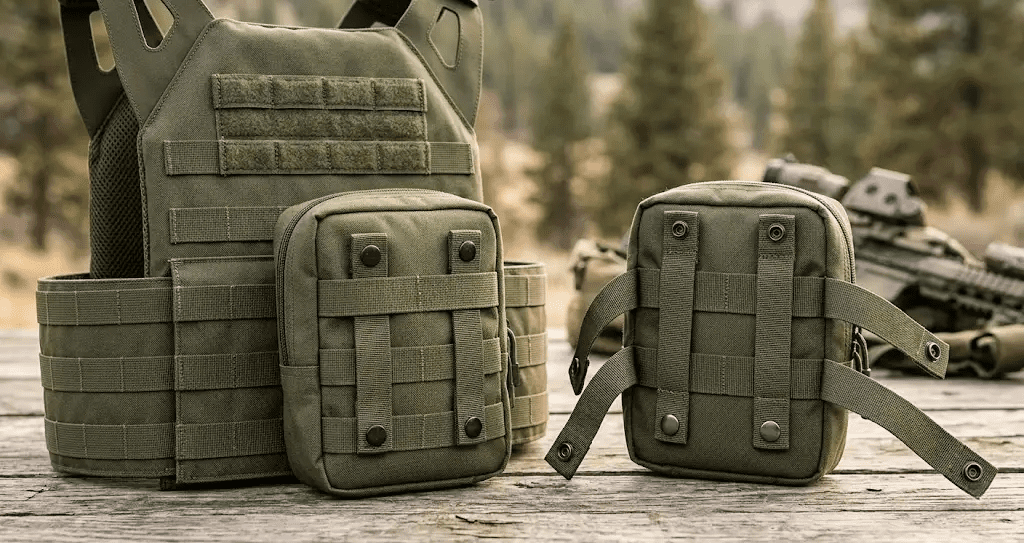
Spoiler alert: It is likely that you have been utilizing both without realizing it.
You have undoubtedly heard both terms used interchangeably or in the same sentence if you have worked in the field of tactical gear for any amount of time. Furthermore, you have probably ended up more confused than when you started if you have ever tried to discover a clear explanation of the true difference.
In plain English, let us correct that.
They Are Not Two Different Systems
First and foremost, it is critical to understand that MOLLE and PALS are not competitors.They are not two distinct attachment systems vying for supremacy.
PALS is the term for the nylon webbing grid that is sewn onto gear to form attachment points.
The bigger MOLLE system includes the concept, the standard, and the method for securing attachments to that webbing.
Consider it this way: PALS is the wall.
What PALS Actually Is
PALS stands for Pouch Attachment Ladder System. Developed in the late 1990s, it’s a standardized grid of horizontal nylon webbing rows built to a precise spec:
- Rows are 1 inch wide
- Spaced 1 inch apart
- Stitching every 1.5 inches creating uniform attachment slots
That standardization is the entire point. When everyone builds to the same spec, a pouch from one manufacturer fits on a vest from a completely different one. Before this existed, every brand ran its own incompatible system. PALS ended that mess.
What MOLLE Actually Is
MOLLE stands for Modular Lightweight Load-carrying Equipment the overall U.S. military program that replaced the older ALICE system. It includes the PALS webbing platform, the pouches designed for it, and the weaving attachment method that locks everything in place.
When people say “MOLLE compatible,” they mean designed to attach to PALS webbing. When they say “MOLLE webbing,” they almost always mean PALS webbing. The terms have merged in everyday use, and honestly, that’s fine as long as you understand what’s actually happening.
Why This Matters When Buying Gear
Why This Matters When Buying Gear
Not all “MOLLE compatible” gear is built to actual PALS spec.
Budget gear often has webbing that looks similar but isn’t precisely measured. Rows slightly too narrow. Spacing slightly off. Stitching in the wrong places. Pouches that do not latch correctly, move under load, or do not sit flush are the outcome.
When it comes to build quality, seek for “PALS spec” or “MILSPEC PALS webbing” rather than just “MOLLE compliant.” You do not learn much from that phrase alone.
How To Attach Correctly
This is where most individuals make mistakes.
Through the PALS rows, the straps of MOLLE accessories are alternately weaved over one row, under the next, and over the next. A mechanical interlock that will not draw out straight is produced by that alternating serpentine pattern. A velcro or snap tab at the end serves as a fallback.
Common mistakes: weaving through only one row, going the same direction instead of alternating, not seating the pouch fully flat before securing. All of these give you a pouch that looks attached but moves under load. To do it correctly, give it an additional 30 seconds.
So Which One Should You Use?
Both because they work together.
Use gear built to PALS spec as your platform. Use the MOLLE attachment method to connect accessories to it. The question was never really “which one” it’s whether both are being done correctly.
When they are, you get a system that’s fast, modular, quiet, and reliable. That’s what it was designed to be.
Buy to spec. Attach correctly. Everything else is just preference.

Leave a Comment