Ross McGinnis: The 19-Year-Old Who Chose Four Lives Over His Own
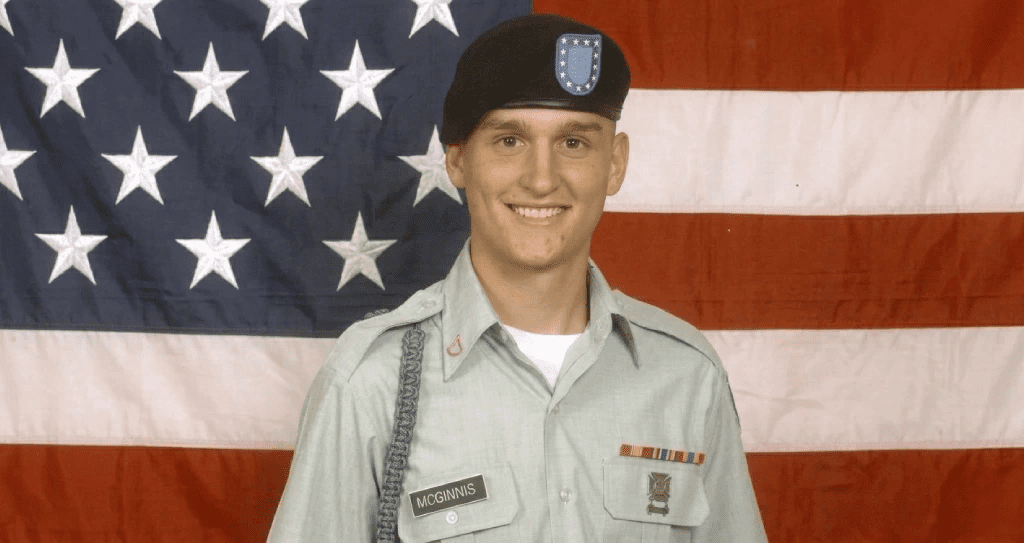
There are moments in history that stop you mid-scroll. You read one line and put your phone down. The story of Ross McGinnis is exactly that. People search for his name out of genuine curiosity, out of grief for someone they never met, or simply because they heard someone say: a teenager jumped on a live grenade to save his friends. And then they needed to know more.
The Street That Changed Everything
Baghdad, December 4, 2006. The Adhamiyah district, one of the most dangerous neighborhoods in the city at that time. A U.S. Army Humvee was rolling through narrow streets when an insurgent on a rooftop threw a grenade directly into the gunner’s hatch.
Private First Class Ross McGinnis was that gunner.
He was standing up through the hatch, scanning the rooftops the way he had been trained to do, when the grenade hit his chest and fell into the vehicle below. His four fellow soldiers were seated inside. Trapped. No way out in time.
He shouted a warning to his crew. Then, instead of pushing himself out of the hatch to safety, he pressed his body down over the grenade and held his position.
The blast killed him on impact.
Sergeant First Class Cedric Thomas, Staff Sergeant Sean Lawson, Specialist Ian Newland, and Private First Class Alan Wagoner all walked away from that vehicle alive.
Ross McGinnis did not.
A Kid From Small-Town Pennsylvania
Before the uniform, before Iraq, before December 4th became a date people mark with silence, Ross was just a teenager from Knox, Pennsylvania. Born on June 14, 1987, he grew up in the kind of American small town where everyone knows your name and your mom’s name and what you did last Friday.
People who knew him described him the same way: funny, restless, full of energy. He liked video games. He wrestled with friends. He made people laugh in that easy, effortless way that some people are just born with.
He enlisted in the Army at 17. His parents, Tom and Romayne, signed the consent papers. He was assigned to the 1st Battalion, 23rd Infantry Regiment, 2nd Infantry Division, and deployed to Iraq in August 2006. He had been in the country for less than four months when he died.
He was 19 years and 10 months old.
Four Seconds, Four Lives, One Irreversible Choice
Military historians who study acts of sacrifice often point to the sheer speed at which these decisions happen. There is no speech. No slow-motion moment of clarity. A grenade has a four-second fuse on average. That is less time than it takes most people to process what is happening.
Cedric Thomas later said that McGinnis made eye contact with him before he went down. He did not look panicked. He did not hesitate. He simply made the choice that he made, and he made it with a composure that Thomas said he has never been able to fully explain in the years since.
That kind of courage does not come from an absence of fear. It comes from something that overrides it. And whatever that something was in Ross McGinnis, it was clearly real.
The Medal That Cannot Replace A Son
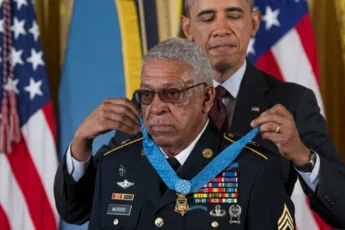
On June 2, 2008, President George W. Bush posthumously awarded Ross McGinnis the Medal of Honor, the highest military decoration the United States grants. His parents stood in the White House to receive it. His mother, Romayne, wore the medal around her neck during the ceremony.
The citation used the language military commendations always use: “conspicuous gallantry and intrepidity at the risk of his life above and beyond the call of duty.” The words are accurate. They are also, inevitably, insufficient.
A U.S. Army barracks in Schweinfurt, Germany was renamed McGinnis Barracks in his honor. His hometown of Knox dedicated a memorial to him. His high school named its football field after him. Every December 4th, the four men he saved go about their lives with something attached to them that no one else can quite carry for them.
Why His Story Sits Alongside The Greatest Acts Of Wartime Courage
What makes Ross McGinnis stand apart is not just what he did. It is who he was when he did it. A 19-year-old. Not a decorated veteran hardened by years of combat. A teenager, barely a year out of high school, who made a decision that seasoned soldiers would spend a lifetime processing.
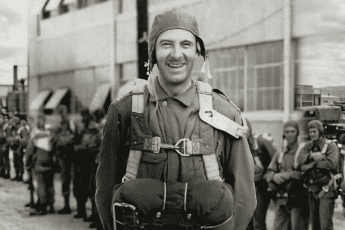
His story belongs in the same breath as the paratroopers who found themselves scattered and alone behind enemy lines in the dark hours before D-Day, relying on nothing but their own courage to survive and complete their mission. If stories of that kind move you, the account of those D-Day paratroopers who landed alone in Normandy is worth reading. Courage, it turns out, looks remarkably similar across generations and wars.
What We Owe The People Who Don’t Come Home
Ross McGinnis was not a symbol when he was alive. He was a person. He called home. He complained about things. He had inside jokes with people whose names we will never know. He had a whole life ahead of him that he traded in four seconds for four other lives.
That is the part that should stay with you.
Not the medal. Not the ceremony. Not the name on a barracks building. The boy himself, standing in that hatch, making a choice that most of us will spend our entire lives never being asked to make.
If this story moved you, explore others like it. The men and women who served deserve to be remembered in full, not just as names in citations but as the real, complicated, extraordinary human beings they were. Start there. Read more. Remember them properly.
Leave a Comment