The Paratroopers Who Jumped Into Darkness Over Normandy The Night Before D-Day And Landed Completely Alone
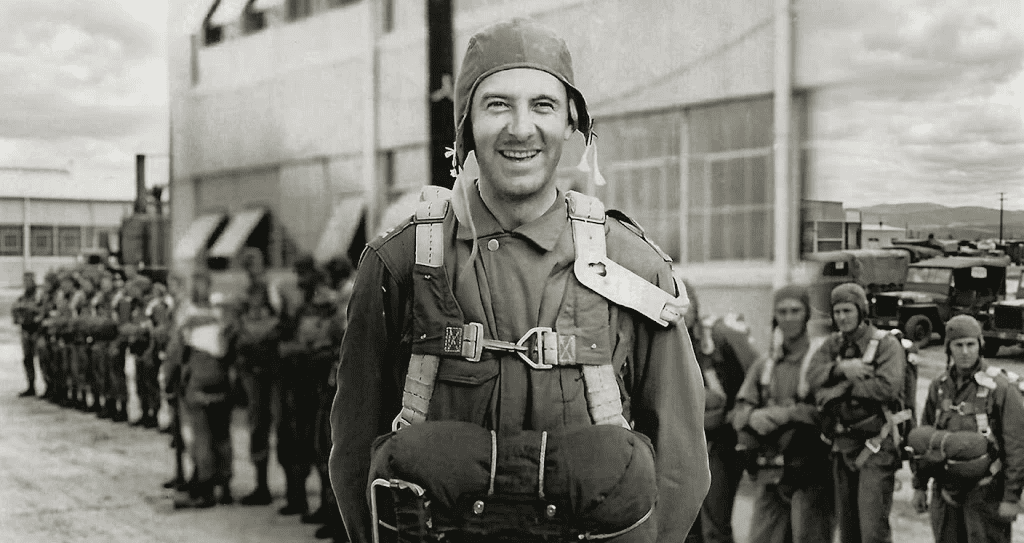
Thirteen thousand American paratroopers stood inside the bellies of C-47 transport planes, engines roaring, crossing the English Channel in the dark. Most of them were nineteen, twenty, twenty-one years old. They wore seventy pounds of equipment strapped to their bodies. They held rifles they had cleaned and checked and cleaned again. And they were about to jump out of perfectly good aircraft into the black sky over Nazi-occupied France.
They had been told the mission was critical. They had been told where to land, what to hold, and how long to wait. What they had not been told was how badly almost everything was about to go wrong.
The Plan That Fell Apart In The Dark
Operation Overlord, the Allied invasion of Normandy, depended on one thing above everything else. Before the first infantry soldier stepped off a landing craft onto a French beach, the exits from those beaches had to be secured. Roads, bridges, causeways. Without control of those routes inland, tens of thousands of men would wade ashore and have nowhere to go. They would pile up at the water’s edge under German fire with no way forward. The carnage would be total.
That was the job of the 82nd Airborne and the 101st Airborne Divisions. Drop behind enemy lines the night before the beach landings. Secure the roads and bridges. Hold them until the infantry arrived.
On paper it was a bold and logical plan. In the air over Normandy in the early hours of June 6, it became something else entirely.
German anti-aircraft fire tore into the formations as the planes crossed the coastline. Pilots, many of them flying combat missions for the first time, began taking evasive action. The tight formations the drop zones depended on scattered across hundreds of square miles of French countryside. Planes flew faster than the drop speed. Planes flew lower or higher than the designated altitude. Green jump lights came on too early, too late, or in the wrong place entirely.
Men jumped into the dark and had no idea where they were.
Alone In Occupied France
Imagine what it felt like to land.
One moment you are inside a roaring aircraft surrounded by men from your company, your platoon, your squad. Men you trained with for months in England, men whose names you know, whose hometowns you know, who owe you money from last Friday’s card game. Then the green light blinks on and you throw yourself into the black sky over France and the plane is gone and the noise is gone and there is only the rush of air and the jolt of the chute opening and then silence.
You drift down into a country you have never seen, in the dark, in silence, surrounded by an enemy you cannot see.
You hit the ground. You gather your chute. You look around.
There is nobody there.
Not one man from your stick. Not one familiar face. Just fields and hedgerows and the distant sound of anti-aircraft guns and the occasional crack of rifle fire somewhere in the dark. You do not know exactly where you are. Your map is useless without a reference point. You are alone in Nazi-occupied France and the invasion of Europe is scheduled to begin in a few hours and you have no idea whether you are five miles from your objective or fifty.
This is what happened to thousands of American paratroopers on the night of June 5 into June 6, 1944. The 82nd and 101st Airborne Divisions were supposed to land in concentrated groups near their objectives. Instead they were scattered across an area stretching roughly twenty-five miles wide and fifteen miles deep. Some sticks landed near each other and managed to assemble small groups of five or ten men. Some men landed entirely alone and did not encounter another friendly soldier for hours. Some never did.
What They Did Anyway
Here is what makes this story not just a story of chaos, but a story of extraordinary men.
They did not wait to be found. They did not hide and hope the situation resolved itself. They moved.
Small groups of American paratroopers, often from different units, different divisions, sometimes different branches, began to find each other in the dark using a simple device. A small metal cricket clicker. One click, pause, two clicks back. That was the signal. That was how they found each other in the hedgerows and the orchards and the narrow Norman lanes in the hours before dawn.
A sergeant from the 506th Parachute Infantry Regiment might find himself leading a group of men from three different companies, none of whom he had ever met, toward an objective he could only estimate the location of. They moved anyway. They attacked road junctions anyway. They cut telephone wires anyway. They ambushed German patrols anyway.
Private John Steele of the 82nd Airborne landed on the church steeple in the village of Sainte-Mere-Eglise and hung there for two hours playing dead while the battle raged in the square below him. He survived. Another man in his stick, Private Ernest Blanchard, cut his chute free and fell to the cobblestones below and was killed on impact. Another, Lieutenant Harold Cadish, landed in the square and was shot before he could release his harness.
In that same village, a handful of paratroopers who had landed nearby gathered themselves in the dark, found each other by cricket clicks and whispered challenges, and secured the town by 0430. Sainte-Mere-Eglise became the first French town liberated on D-Day. It was taken by paratroopers who were not supposed to be there, who were far from their assigned positions, who made up the plan as they went.
The Hedgerows And The Hours Before Dawn
The Norman countryside was not what the planners in England had anticipated. The bocage, the ancient network of dense hedgerows that divided the landscape into hundreds of small enclosed fields, turned the night into a maze. Men who landed in fields found themselves enclosed by earthen walls eight and ten feet high, topped with thick shrubs and trees, with only narrow gaps between them that could hold one man at a time. Visibility was almost zero. Every gap in every hedgerow could be an ambush.
German soldiers were moving through the same countryside, alerted by the aircraft, by the anti-aircraft fire, by the sounds of scattered firefights breaking out across the region. The roads were dangerous. The fields were dangerous. The villages were garrisoned. The dark itself was dangerous.
And through all of it, in small groups and sometimes alone, American paratroopers moved toward objectives they could only guess at, toward a beach they could not see, toward an invasion force that had not yet arrived.
Some of them walked for hours before making contact with friendly troops. Some fought small, vicious engagements in the dark with whatever men they happened to be carrying. Some were killed within minutes of landing, tangled in their chutes in trees or canals, unable to fight back. The low marshlands behind Utah Beach that German Field Marshal Rommel had deliberately flooded as a defensive measure drowned men who landed in them under the weight of their equipment before they could cut themselves free.
Nobody knows exactly how many paratroopers died in those flooded fields that night. Their bodies stayed there for days.
What They Were Holding For
As dawn approached and the sky over the Channel began to lighten, the men on the beaches were coming.
At 0630 on June 6, 1944, the first wave of infantry landed on the five Normandy beaches. At Utah, Omaha, Gold, Juno, Sword, tens of thousands of men waded through cold water under fire toward the shore. At Omaha the casualties in the first hour were catastrophic. Men were cut down before they reached the sand. The sea turned red.
But at Utah Beach, where the 101st Airborne had been working through the night to secure the causeways inland, the advance moved faster than any other beach that day. The paratroopers, scattered and disorganized and half of them lost, had still done enough. The roads behind the beach were contested, some held, some under fire. But they were not in German hands. The infantry could move.
The actions of individual paratroopers throughout that night, small unit decisions made by exhausted, frightened young men with no communications and no clear orders, directly influenced how many men lived and died on those beaches in the morning light.
The Boys Who Never Made It To Morning
Not everyone who jumped out of those planes in the dark came home from France.
Roughly 2,500 American paratroopers from the 82nd and 101st Airborne were killed, wounded, or captured in the first twenty-four hours of Operation Overlord. Many of those casualties happened in those dark hours before the beach landings began, in fields and orchards and canal banks across the Cotentin Peninsula, in small firefights that history barely recorded.
They were boys who had grown up during the Depression. Boys who had worked farms and gas stations and factory floors. Boys from Georgia and Ohio and California and Texas who had never been to Europe, who had learned to jump out of aircraft in training fields in the American South, who had spent months in England waiting for this night. Boys who wrote letters home to their mothers telling them not to worry.
Some of them were dead before the letters arrived.
There is a military cemetery at Colleville-sur-Mer, overlooking Omaha Beach in Normandy. Nine thousand three hundred and eighty-seven white crosses and Stars of David stand in rows across a perfectly maintained green lawn above the cliffs. The graves include paratroopers. Many of them were found in fields and hedgerows days and weeks after the battle, by French farmers who came back to tend their land.
The French people of Normandy have never forgotten them. There are villages in that region where the inhabitants still lay flowers on the graves of paratroopers they never met. Where the elderly men and women remember being children in 1944, waking to the sound of aircraft in the dark, and finding American soldiers in their barns in the morning. Where Liberation Day is still marked every year with a gravity that the passage of eighty years has not diminished.
What One Night Cost And What It Bought
In the decades since Normandy, military historians and veterans have debated the decision to use airborne troops in that operation. The scatter was too great. The losses were too high. The objectives were only partially achieved. By the cold calculations of military planning, the airborne operation on the night of June 5 was a qualified success at best.
But the men who landed on those beaches in the morning, who waded through the surf at Utah and Omaha, who lived through that day and went on to fight through France and into Germany, many of them credited the paratroopers explicitly. The Germans could not move their reserves cleanly. The roads were contested. The night was full of firefights from dozens of scattered, disorganized American soldiers who were supposed to be somewhere else and chose to fight from wherever they happened to land.
In war, confusion cuts both ways. The American paratroopers were confused, yes. But so were the Germans defending against them. A force that was supposed to arrive in organized groups and attack specific objectives instead seemed to appear everywhere at once, in ones and twos and small squads, from directions that made no tactical sense. It looked, from the German side, like a much larger and more coordinated force than it actually was.
The chaos that nearly destroyed the airborne operation may have been the same chaos that made it work.
A Darkness Worth Remembering
There is something about the image of those thirteen thousand young men standing in those planes over the Channel in the dark that is almost impossible to hold in the mind without feeling the full weight of it.
They knew what was waiting on the other side of that jump. They had been briefed. They had studied the maps. They understood that the anti-aircraft fire would be heavy, that the landing zones might be contested, that some percentage of them would not survive the night. They knew all of this and they shuffled to the door and they jumped anyway.
Not because they were not afraid. Every account left by the men who survived that night describes fear. The cold sweat, the dry mouth, the silence inside the aircraft in the final minutes before the jump. Fear is not the absence of courage. Fear is the exact condition courage operates in.
They jumped because the man in front of them jumped. Because the mission required it. Because there were men on those beaches counting on them to hold the roads. Because they had trained for this, because their country had sent them here, because there was nothing else to do but go.
They landed in the dark. They were alone. They moved toward the sound of the guns.
That is the whole story and it is enough.
On the 80th anniversary of D-Day in June 2024, the last surviving veterans of the Normandy landings gathered in France for what most people understood would be the final large commemoration they would attend. The youngest of them were in their late nineties. They sat in wheelchairs on the bluffs above the beaches where they had fought as young men, and French children placed flowers in their hands, and the world paused for a moment to remember what they had done.
They are almost all gone now. But the fields are still there. The hedgerows are still there. The church steeple in Sainte-Mere-Eglise still stands, and from it every year hangs a paratrooper mannequin in memory of Private John Steele, who hung there in the dark while the battle raged below and somehow lived.
Some stories are too important to stop telling.

Leave a Comment