Louis Zamperini Survived 47 Days On A Raft And Two Years In A Japanese Prison Camp And Never Broke
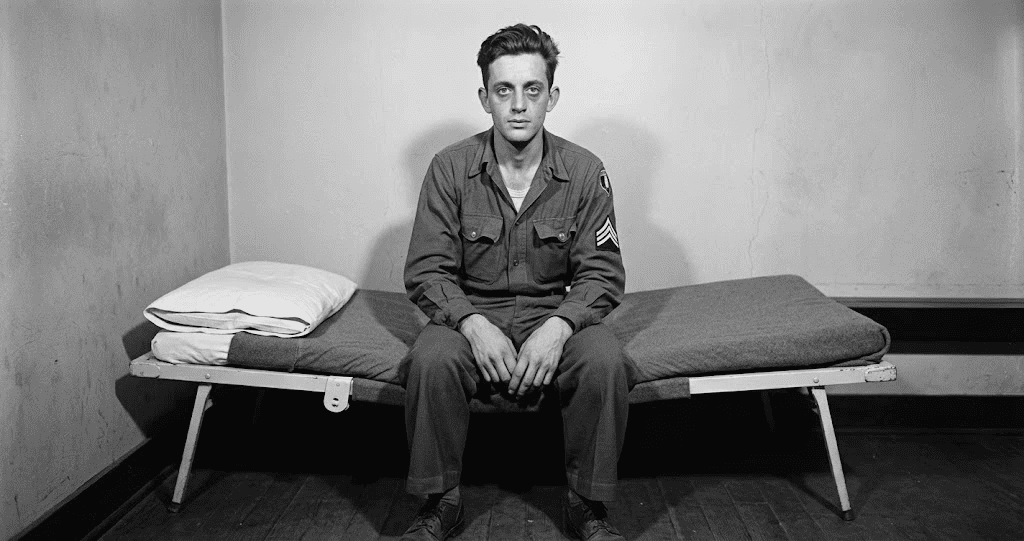
Every person has a breaking point. At least, that is the assumption. Louis Zamperini spent two years inside Japan’s most brutal prisoner of war camps being used as proof of that theory. The man running the experiment never succeeded.
The Man Who Refused To Surrender
There is a certain category of historical figure whose life resists exaggeration because the facts themselves are extraordinary enough. Louis Zamperini belongs to that category. An Olympic runner, a WWII bombardier, a castaway, and a prisoner of war, Zamperini endured experiences that would have destroyed most men. Yet he did not break. The Louis Zamperini survival story stands today as one of the most documented and compelling accounts of human endurance in the twentieth century.
From The Track To The Cockpit
Born in 1917 in Olean, New York, Louis Zamperini grew up in Torrance, California, where he channeled a rebellious streak into competitive running. He qualified for the 1936 Berlin Olympics at age 19, competing in the 5,000-meter race and catching the attention of Adolf Hitler himself after a remarkable final lap. His athletic promise pointed toward the 1940 Tokyo Olympics, but World War II eliminated that ambition entirely.
Zamperini enlisted in the United States Army Air Forces and trained as a bombardier. By 1943, he was stationed in the Pacific Theater aboard B-24 Liberator bombers, flying missions across enemy-controlled waters. The work was dangerous, the aircraft were often worn down, and the Pacific was unforgiving.
The Crash That Changed Everything
On May 27, 1943, Zamperini and his crew boarded a notoriously unreliable B-24 known as the Green Hornet to search for a missing aircraft near the Marshall Islands. The bomber suffered mechanical failure mid-mission and crashed into the Pacific Ocean. Of the eleven men aboard, only three survived the initial impact: Zamperini, pilot Russell Allen Phillips, and tail gunner Francis McNamara.
The three men pulled themselves onto two small rubber life rafts with almost no supplies. What followed was 47 days adrift on the open ocean, a duration that remains one of the longest documented open-sea survival episodes in WWII history. The men faced dehydration, starvation, shark attacks, and repeated strafing runs from Japanese aircraft. McNamara died on day 33. Zamperini and Phillips survived by catching rainwater, eating raw fish and birds with bare hands, and maintaining a psychological discipline that defied their physical condition.
For authoritative documentation of WWII Pacific survival records, the National WWII Museum provides extensive historical records and survivor accounts that validate these documented events.
Capture And Imprisonment
In August 1943, the two surviving men were picked up by a Japanese naval vessel. Rather than receiving medical care, they were subjected to interrogation and transferred to a series of increasingly brutal prisoner of war camps.
Zamperini was held in multiple facilities across Japan, most infamously at the Omori camp near Tokyo and later at Naoetsu. At Omori, he came under the direct, obsessive attention of Sergeant Mutsuhiro Watanabe, known among prisoners as “The Bird.” Watanabe singled Zamperini out specifically because of his Olympic fame, subjecting him to regular beatings, public humiliation, and forced labor intended to psychologically break a man whose name he recognized.
Zamperini survived nearly two years of captivity. During that time, he was malnourished, repeatedly assaulted, and denied basic dignities. The Japanese military did not acknowledge his status to American authorities. His family was informed he had been killed in action. He was officially declared dead.
For readers interested in another story of extraordinary courage from the WWII era, Vernon Baker’s story offers a parallel account of a Black American hero whose valor the Army initially tried to erase from the historical record.
What Kept Him Alive
The psychological dimensions of Zamperini’s survival have been studied and discussed in depth by historians and psychologists alike. Several factors emerge consistently from accounts of his imprisonment.
First, his athletic background built a mental framework for pain tolerance and performance under pressure. Competitive runners understand suffering as temporary. Second, Zamperini maintained a deliberate mental life in captivity. He mentally cooked meals, recited scripture he had memorized, and constructed detailed imaginary narratives to occupy his mind.
Third, his relationship with fellow prisoners created a social contract of survival. According to the Library of Congress Veterans History Project, soldiers who maintained interpersonal bonds in captivity consistently showed higher survival rates than those who became isolated.
Watanabe’s obsession with breaking Zamperini ultimately failed. The act of targeting one man that specifically, historians have argued, may have reinforced Zamperini’s resolve rather than depleting it.
Liberation And The Long Road Home
Japan surrendered in August 1945 following the atomic bombings of Hiroshima and Nagasaki. American forces liberated POW camps across Japan, including the camp at Naoetsu where Zamperini was held. He returned to the United States significantly underweight and carrying severe psychological trauma that would manifest as post-traumatic stress disorder, though that clinical term was not yet in widespread use.
His struggles after the war were significant. He battled alcoholism and recurring nightmares centered on Watanabe. His marriage came under severe strain. The transition from heroic symbol to troubled veteran was painful and private.
His recovery came through a religious conversion following a Billy Graham crusade in Los Angeles in 1949. Zamperini attributed his psychological healing directly to that experience, and he subsequently traveled to Japan where he publicly forgave his former captors, including guards from the POW camps. He never located Watanabe for a direct meeting, but he stated his forgiveness extended to him regardless.
Legacy And Historical Significance
Louis Zamperini’s story was documented most prominently in Laura Hillenbrand’s 2010 biography Unbroken: A World War II Story of Survival, Resilience, and Redemption, which became a global bestseller and was later adapted into a feature film directed by Angelina Jolie. The book brought his story to a new generation, though Zamperini himself had spent decades speaking in schools and churches about his experiences.
He died on July 2, 2014, at the age of 97 in Los Angeles. He had spent his post-war decades as a public speaker, motivational figure, and advocate for troubled youth through a program he helped found in the San Bernardino Mountains. The United States Olympic and Paralympic Museum recognizes Zamperini as one of the defining American athletic and historical figures of the twentieth century.
His story is not merely one of physical survival. It is a documented case study in psychological endurance, the deliberate maintenance of identity under extreme dehumanization, and the capacity for forgiveness after prolonged trauma.



Leave a Comment