Korean War Veterans Spent Decades Being Called The Forgotten Generation And Most Of Them Never Complained
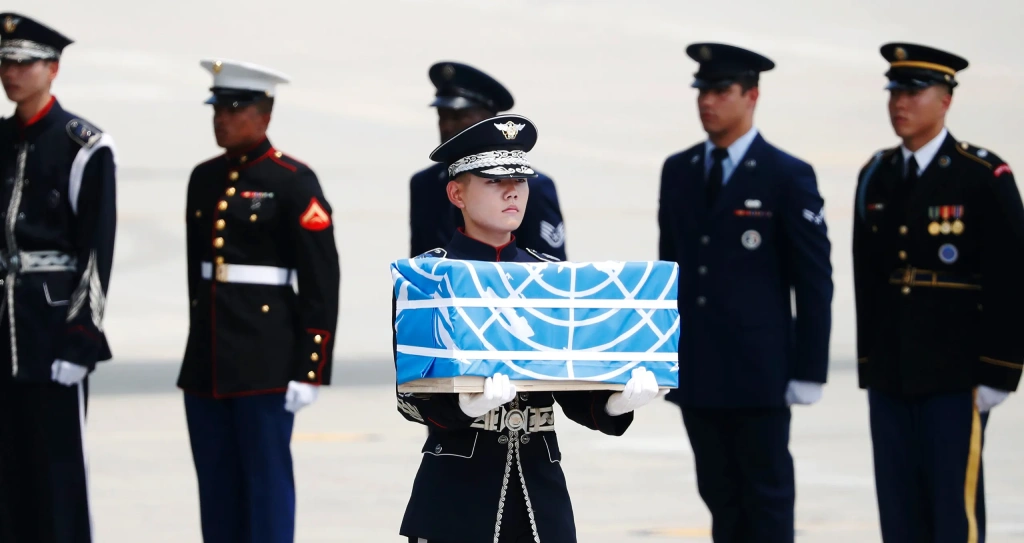
There is a particular kind of pain that comes not from a wound, but from being looked through.
Imagine fighting in one of the most brutal conflicts of the 20th century. Imagine surviving temperatures that froze weapons and men alike in the mountains of North Korea. Imagine watching friends die in places most Americans couldn’t find on a map. And then imagine coming home, expecting at least the acknowledgment your sacrifice deserved, only to find that your country had already moved on.
That was the reality for roughly 5.7 million Americans who served during the Korean War between 1950 and 1953. They returned to a nation still emotionally invested in the triumph of World War II, a country growing nervous about Vietnam, and a public that largely had no framework to process a war that ended without a clear winner. They were called the forgotten generation, not as a compliment, and not by accident. And for decades, most of them accepted it quietly.
This article is about why that happened, what it cost them, and why their silence may be one of the most overlooked acts of dignity in American military history.
Why The Korean War Became The “Forgotten War”
A War Sandwiched Between Giants
The Korean War began on June 25, 1950, when North Korean forces crossed the 38th parallel and invaded South Korea. The United States, acting under a United Nations mandate, entered the conflict within days. By November of that year, Chinese forces had entered the fight, turning what seemed like a quick campaign into a grinding, deadly stalemate.
By the time the armistice was signed on July 27, 1953, more than 36,000 Americans had died, over 100,000 were wounded, and thousands more were held as prisoners of war or listed as missing. The front lines had barely moved. Korea was still divided at nearly the same line where the war started.
That ambiguous ending was a major reason the conflict faded so quickly from public consciousness. World War II had given Americans a story with a clear beginning, a clear enemy, and a decisive victory. Korea offered none of that. It was a war prosecuted under the strange new doctrine of “limited war,” designed not to win territory but to contain communism. That kind of war is hard to celebrate, and harder still to explain to a parade crowd.
The Shadow Of Two Other Wars
The Korean War arrived at the worst possible moment in terms of public attention. It followed World War II, which had consumed the national identity for years, and it preceded Vietnam, which would dominate the cultural conversation for decades. Korean War veterans occupied the awkward middle ground. They weren’t the “Greatest Generation,” and they weren’t the Vietnam veterans whose struggles sparked ongoing national debate.
The American press gave the conflict relatively limited coverage compared to World War II. Television was still in its early stages. The government made no major push for war bonds, no sweeping recruitment campaigns, no national narrative of shared sacrifice the way it had during the previous decade. Even the official government terminology tried to minimize it, calling it initially a “police action” rather than a war.
The phrase “Forgotten War” wasn’t coined by critics or historians looking back. It was being used almost immediately after the armistice. Veterans returning in 1953 and 1954 were already hearing it, already sensing that their service had been absorbed into the national background noise.
The Reality Faced By Korean War Veterans After Returning Home
No Ticker-Tape Parades, No National Embrace
When World War II veterans came home, they were celebrated as heroes. Cities held parades. Legislation like the G.I. Bill offered education, housing loans, and career support. The public understood what they had sacrificed.
Korean War veterans arrived home to a different reception. In many cases, no formal ceremony marked their return at all. Some veterans described stepping off transport ships or planes and simply blending back into civilian life with little acknowledgment. A handshake here. A quiet “welcome back” there. And then life resumed.
The absence of celebration was not just symbolic. It sent a message, whether intended or not, that this war had been something smaller, something less worthy of recognition. Veterans absorbed that message, and many internalized it for decades.
The Psychological Weight They Carried Alone
PTSD, then called “combat fatigue” or simply not named at all, was barely understood as a medical concept in the early 1950s. Veterans returning from Korea had no established mental health infrastructure designed to help them process what they had seen. Frostbite, extreme combat, POW experiences, and the death of close friends left marks that didn’t show on the outside.
Because society wasn’t asking about their experiences, many veterans simply didn’t talk about them. Wives, children, and friends often knew very little about what their loved ones had gone through. This silence became a second kind of burden. The war existed in them, but not around them.
The Economic And Social Pressures Of A Postwar Boom
The early 1950s were a period of significant economic growth in the United States. The suburbs were expanding. Consumer culture was rising. The cultural pressure was to move forward, to build, to prosper. Veterans who came home carrying the weight of an unpopular and unresolved conflict found themselves expected to slip into this new American normal without complaint.
Many did exactly that. They took jobs, started families, bought houses, and built ordinary lives. And while there is something admirable about that resilience, there is also something quietly tragic about it. The men who had served in extreme conditions, who had watched their comrades fall in places like Chosin Reservoir and Pork Chop Hill, were expected to simply get on with it.
Most of them did.
Why Korean War Veterans Were Overlooked Compared To Other Generations
The Greatest Generation Effect
World War II veterans occupied a position of near-mythological status in American culture. Their war had defined the nation. Their sacrifice had arguably saved the world from fascism. The storytelling around that generation was massive and sustained, from films and novels to political careers and public monuments.
Korean War veterans couldn’t compete with that narrative. And in a cultural sense, they weren’t expected to. They were often younger brothers or cousins of World War II veterans, fighting a war their fathers’ generation might have found hard to explain as necessary.
Vietnam Overshadowed Them From The Other Direction
As Korean War veterans aged, the national conversation shifted dramatically to Vietnam. By the mid to late 1960s, antiwar protests, draft resistance, and the moral questioning of American military involvement dominated public discourse. Vietnam veterans, despite their own struggles with recognition, eventually generated a sustained cultural response through films, memoirs, and political activism.
Korean War veterans found themselves crowded out again. The public’s emotional capacity for military recognition seemed split between two groups, neither of which was them. They were too recent to receive the reverence given to World War II, and not controversial enough to generate the debate that eventually forced acknowledgment of Vietnam veterans’ pain.
The Government’s Role In Diminishing The Narrative
Early government messaging around Korea emphasized its limited nature. President Truman’s “police action” framing was politically convenient but deeply insulting to those who had fought and died under that banner. There was no formal declaration of war, which made honoring veterans in the traditional sense feel procedurally complicated.
Monuments and memorials came late. The Korean War Veterans Memorial in Washington D.C. wasn’t dedicated until July 27, 1995, forty-two years after the armistice. By that point, many of the men it honored had already died.
Their Silent Resilience: A Generation That Didn’t Ask For Sympathy
A Product Of Their Time And Upbringing
The men who fought in Korea had largely grown up during the Great Depression. They had been shaped by scarcity, by hardship, and by a cultural expectation that you endured difficulty without complaint. Many of them viewed stoicism not as emotional suppression but as a form of dignity.
When they came home to limited recognition, most didn’t protest. They didn’t form advocacy groups demanding parades or presidential apologies. They went to work. They raised children. They showed up.
There is something worth sitting with in that. A generation that had survived poverty and then war, that had watched the nation absorb their sacrifice with a polite nod and then look away, responded with neither bitterness nor self-pity. At least not publicly.
What Veterans Said In Their Own Words
In oral history projects and interviews conducted decades later, Korean War veterans consistently described a quiet acceptance of their status. Many expressed not anger at being forgotten, but a kind of wry acknowledgment. “We knew coming home,” one veteran told an interviewer, “that this wasn’t going to be like World War II.” Others simply noted that they “did what needed to be done” and expected nothing more.
That acceptance, while admirable in many ways, also masked real costs. Depression, estrangement from families, and difficulties adjusting to civilian life were common but rarely discussed openly. The culture of stoicism that helped them survive combat may have also prevented them from seeking help when they needed it most.
The Dignity In Doing The Work Anyway
What makes the Korean War generation particularly worth examining is not just what they endured, but how they responded to it. They built much of postwar America. They contributed to industries, communities, and institutions. They voted, paid taxes, and raised the generation that would go on to both protest Vietnam and build the technology revolution.
Their contribution to the country that had largely forgotten their sacrifice was enormous, and largely unremarked upon.
Real Stories From The Forgotten War
The Men Of Chosin Reservoir
In November and December of 1950, approximately 15,000 United Nations forces, most of them American Marines and soldiers, were surrounded by more than 120,000 Chinese troops in the Chosin Reservoir region of North Korea. Temperatures dropped to minus 35 degrees Fahrenheit. Supply lines were cut. Evacuation seemed impossible.
What followed was one of the most extraordinary military retreats in American history. The forces fought their way out over seventeen days, suffering severe casualties but maintaining enough cohesion to avoid total destruction. The Marines described it afterward not as a retreat but as an “attack in a different direction.”
Many of the men who survived Chosin came home to find that most Americans had barely heard of the battle. Their achievement, extraordinary under any standard of military evaluation, registered almost nothing in the public consciousness.
Chester Ovnand And The Quiet Veterans
The American Legion and other veterans’ organizations have documented dozens of cases of Korean War veterans who served with exceptional courage and returned to live entirely ordinary lives with no public recognition. For many, recognition from their own community or family was the only form of honor they ever received.
Organizations dedicated to preserving Korean War history, such as the work documented in resources like the American Legion’s coverage of Korean War stories and veterans’ oral histories, have been working for years to capture these accounts before they are lost entirely. These efforts represent an important form of late recognition, acknowledging that history written only through official records misses most of the human story.
Cultural And Political Factors Behind Their “Forgotten” Status
The Cold War Context And National Anxiety
The Korean War was fought at the height of early Cold War anxiety. McCarthyism was at its peak. The fear of communism was reshaping American domestic politics in profound ways. In that environment, a war that ended in stalemate against communist forces was not the kind of story that the American national narrative wanted to amplify.
A decisive victory could have been framed as a Cold War triumph. A stalemate had to be quietly explained away. The veterans of that stalemate were, in a sense, inconvenient reminders of American military limits during a period when the country needed to project strength.
The Role Of Media And Popular Culture
Popular culture during the 1950s largely ignored Korea. Hollywood produced relatively few films about the conflict compared to its extensive output on World War II. Television dramas and novels focused elsewhere. The cultural machinery that had so effectively honored the World War II generation was not deployed in the same way for Korea.
One notable exception came later, and indirectly. The television series MASH, which aired from 1972 to 1983, was set during the Korean War but was widely understood as a commentary on Vietnam. Its enormous popularity and critical success ironically drew public attention back toward Korea, but through a lens filtered by a completely different conflict. Korean War veterans often found this frustrating. Their war was being used as a metaphor for someone else’s.
How The Armistice Rather Than A Surrender Defined Their Legacy
Wars in the American imagination tend to end with surrender ceremonies. Japan’s formal surrender on the deck of the USS Missouri became an iconic image of World War II’s conclusion. Korea ended with a negotiated armistice, a piece of paper signed in a tent in Panmunjom, with no equivalent moment of triumph.
That difference in ending shaped everything that followed. Without a clear victory to celebrate, there was no obvious moment around which national gratitude could be organized. The veterans carried that ambiguity with them for the rest of their lives.
Modern Recognition Efforts And Changing Narratives
The Korean War Veterans Memorial And Belated Acknowledgment
The dedication of the Korean War Veterans Memorial in Washington D.C. in 1995 was, for many veterans, a deeply emotional moment. President Bill Clinton’s remarks acknowledged directly what had gone unsaid for decades. The memorial’s nineteen stainless steel soldiers, moving through a triangular field toward an American flag, captured something of what those men had walked through.
For veterans who attended the dedication in their seventies, it was recognition that came late but still mattered. Many described it as unexpectedly moving. Some wept. Others said quietly that they had waited a long time for this.
Congressional And Presidential Recognition
In 1999, Congress authorized the Korean War Service Medal to be awarded to veterans who hadn’t received it earlier. Annual observances on July 27, designated as Korean War Veterans Armistice Day, have grown over the years. Presidential proclamations have increasingly named and honored Korean War veterans directly.
South Korea has also played a significant role in modern recognition efforts. The South Korean government has long viewed the Korean War as its war of survival, and Korean Americans and South Korean officials have participated in memorial events and oral history projects in ways that have helped frame the sacrifice of American veterans within the context of what they actually preserved: a democratic South Korea that has become one of the world’s major economies.
Oral History Projects And Academic Recovery
Universities, libraries, and veterans’ organizations have expanded efforts to collect first-person accounts from Korean War veterans. The Library of Congress Veterans History Project, the Korean War Legacy Foundation, and numerous regional efforts have digitized interviews and documents that give these veterans a presence in the historical record.
These projects carry an urgency that is not lost on those involved. The youngest Korean War veterans are now in their late eighties and nineties. The window for hearing directly from the men who served is closing rapidly. The race to preserve their stories before they are gone is itself a form of recognition, an acknowledgment that history is impoverished without their voices.
FAQ: Korean War Veterans And The Forgotten Generation
Why is the Korean War called the “Forgotten War”? The Korean War is called the Forgotten War primarily because it ended in a stalemate rather than a clear victory, followed closely after the celebrated triumph of World War II, and was quickly overshadowed by the Vietnam War in public consciousness. The lack of media coverage, the absence of a formal declaration of war, and limited public engagement all contributed to its fading from national memory far faster than other major conflicts.
How many Americans served in the Korean War? Approximately 5.7 million Americans served during the Korean War era. Of those, around 1.8 million served in the Korean theater of operations. More than 36,000 Americans died during the conflict, with over 100,000 wounded and thousands listed as missing in action or held as prisoners.
Did Korean War veterans receive the same benefits as World War II veterans? In terms of formal legislation, Korean War veterans technically had access to the same G.I. Bill benefits as World War II veterans. However, the cultural recognition, public appreciation, and sustained support were considerably less robust. The infrastructure for addressing mental health issues, in particular, was far less developed, and the lack of public awareness about their service meant that community support was often absent.
When was the Korean War Veterans Memorial built? The Korean War Veterans Memorial in Washington D.C. was dedicated on July 27, 1995, forty-two years after the armistice that ended the Korean War. It was a long overdue acknowledgment of the sacrifice made by those who served, and its dedication was attended by thousands of aging veterans for whom the recognition carried profound personal meaning.
Why did most Korean War veterans never complain about being forgotten? Most Korean War veterans came of age during the Great Depression and entered military service during an era that valued stoicism, duty, and self-reliance. They largely accepted their overlooked status as part of the cost of service without expecting public reward. Cultural norms of the time discouraged public expressions of grievance, and many veterans channeled their energy into building civilian lives rather than advocating for recognition.
Conclusion: The Quiet Dignity Of A Generation Worth Remembering
There is a particular kind of honor in doing the right thing without expecting anyone to notice.
The men and women who served in the Korean War did exactly that. They answered their country’s call during a conflict the country later chose not to remember clearly. They came home to limited recognition and mostly accepted it. They built lives, contributed to communities, and died, many of them, before the monuments went up or the presidential proclamations were read.
Their silence was never weakness. It was a reflection of the values their generation carried, values shaped by hard times and reinforced by a code of conduct that said you served because it was right, not because you would be celebrated for it.
But silence should not become permanent erasure. The story of the Korean War generation deserves to be told fully and told often, not out of obligation, but because understanding what they went through, and how they carried it, tells us something important about what national service actually means and what nations owe to those who serve them.
If you want to learn more about the individual stories behind this generation, or to support organizations preserving their legacies, explore the growing archives of veteran oral histories and memorial projects dedicated to making sure these men and women are no longer overlooked.
They waited long enough.

Leave a Comment