Honest Luminox Navy SEAL Chronograph Review
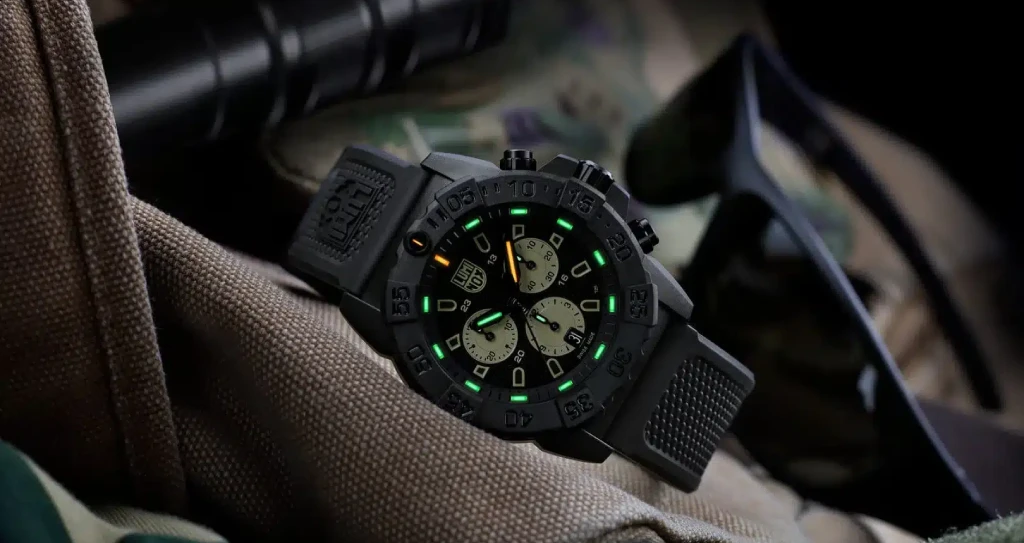
Picture this. You’re three hours into a pre-dawn hike, your phone battery is dead, and your flashlight just died. You glance down at your wrist. The time is glowing. Not a dim flicker. A clean, confident glow, bright enough to read without squinting.
That’s the Luminox promise. And honestly? It delivers on that specific part.
But a watch is more than its lume. So let’s do a proper Luminox Navy SEAL Chronograph review and talk about what this watch gets right, what it gets wrong, and whether it belongs on your wrist.
Quick Specs Snapshot
Before we go deep, here’s the breakdown at a glance:
- Case material: Carbonox (carbon composite, not stainless steel)
- Case diameter: 45mm
- Case thickness: 13mm
- Crystal: Mineral (not sapphire)
- Movement: Swiss quartz (Ronda caliber)
- Water resistance: 200 meters (20 ATM)
- Lume system: Self-illuminating tritium gas tubes (no charging required)
- Strap: Rubber / Nylon NATO options
- Price range: $350–$600 depending on variant
What Actually Matters
Night Visibility That Actually Works
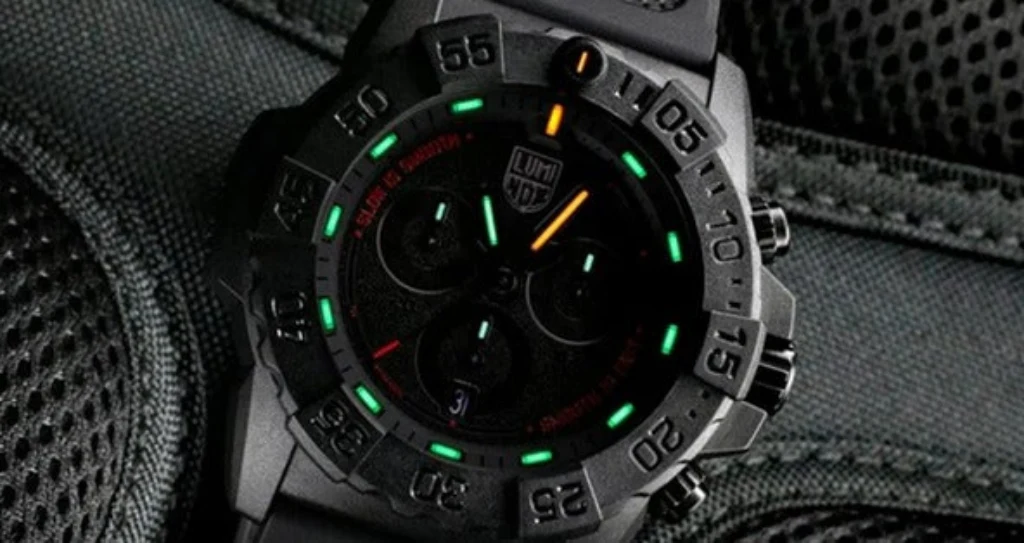
This is the headline feature, and Luminox earns it. The tritium tubes embedded in the hands and indices glow constantly, meaning you never shake your wrist, never charge it under a lamp. It just glows. Always.
That 25-year tube lifespan is real. Unlike photoluminescent lume that fades within an hour of darkness, Luminox handles complete blackout environments without any prep. Underwater, in a tent, in a car with blackout curtains. It does not matter.
For anyone asking “is Luminox Navy SEAL worth it?” purely from a visibility standpoint, the answer is yes. Nothing at this price does darkness better.
Chronograph Usability
The pushers are responsive and firm, which is good for gloved operation. The sub-dials are readable but not spacious. If you have larger wrists or older eyes, it takes a moment to parse the layout. The uni-directional bezel also doubles nicely as a backup countdown tool when you don’t want to fuss with the chrono function.
Casual timing tasks? Great. Splitting laps on a running track? A bit awkward. This is more a dive and tactical tool than a sport chronograph.
Comfort And Wrist Feel
At 45mm and 13mm thick, this isn’t a subtle watch. It sits high on the wrist. Under a shirt cuff, it’s a fight. But with a rubber or NATO strap in outdoor settings, it feels planted and secure. The Carbonox case plays a big role here. The watch is noticeably lighter than it looks. That matters on long hauls.
Build Quality And Design
Carbonox Case: The Real Deal
Carbonox is Luminox’s proprietary carbon composite material. It’s not marketing fluff. Compared to standard steel cases, it resists scratches better, weighs significantly less, and handles temperature extremes without the micro-expansion issues you get with cheaper alloys.
The sand-blasted matte black finish gives it a tactical, understated look. There’s no flash here. It reads as a working tool, not a fashion piece. For some people, that’s exactly the point.
Mineral Crystal: The Legitimate Complaint
This is where the Luminox Navy SEAL Chronograph review gets honest. At $400–$600, the mineral crystal is a genuine downside. Sapphire is the standard at this price tier from competitors. Mineral scratches are easier and offer less optical clarity.
Is it a dealbreaker? Not necessarily. But it’s a visible compromise, and buyers should know it is going in.
Pros And Cons
Pros:
- Tritium lume is genuinely superior for low-light use
- Carbonox case is lightweight and properly durable
- 200m water resistance handles serious use
- Legible dial with practical layout
- Solid build for the price category
Cons:
- Mineral crystal at this price feels like a cutback
- Quartz movement draws criticism from mechanical watch enthusiasts
- 45mm is large for smaller wrists
- Chrono sub-dials can feel cramped
- Crown design requires care around the rubber gasket over time
Common Concerns About The Luminox Navy SEAL Chronograph
A lot of buyers come in with real questions and genuine hesitation. Here are the most common ones, addressed properly.
The mineral crystal scratched within a few months. What do I do?
This is a real and fair complaint. Mineral crystal is softer than sapphire, and it will pick up surface scratches with regular use. The fix: a watch crystal polishing kit (around $10–$15) removes light scratches effectively. For deeper damage, any watchmaker can replace a mineral crystal affordably, usually under $40. If this bothers you before buying, that cost is worth factoring into your decision upfront.
“The rubber strap started degrading. Is that normal?”
Yes, and it is completely expected. Rubber straps on any watch break down over time, especially with sun, sweat, and salt water exposure. The good news is the Luminox strap is a standard lug width (23mm on most Navy SEAL models), so replacements are easy to find. A quality aftermarket rubber or NATO strap costs $15–$30 and can actually improve comfort over the stock option.
“I am not sure if quartz is worth paying this much for.”
This comes down to what you are actually buying. The movement is Swiss quartz from Ronda, which is accurate and reliable. You are not paying for a mechanical movement. You are paying for the Carbonox case, the tritium lume system, the 200m water resistance, and the overall build spec. If a precision mechanical movement matters to you, this watch will always feel like a compromise. If dependable function in hard conditions matters more, quartz is actually the better choice here since it does not need winding and holds accuracy regardless of how active you are.
“The crown feels stiff and I am worried about damaging the gasket.”
This is not a defect. The double gasket crown is designed to be firm because it is part of the water resistance seal. Do not force it. Unscrew it fully before adjusting the time, and screw it back down firmly after. Every 1–2 years, have a watchmaker check and replace the gasket if you use it in water regularly. This basic maintenance keeps the 200m rating intact.
Who Should Actually Buy This Watch?
This watch makes sense for:
- Military personnel, law enforcement, or first responders who genuinely work in low-light conditions
- Divers who want reliable timekeeping underwater without fumbling with lume charging
- Outdoor enthusiasts: hikers, campers, hunters who spend real time in darkness
- Watch buyers who want visible function over mechanical prestige
It’s probably not the right call for:
- People who want a formal or dress watch
- Buyers prioritizing movement quality or sapphire crystal
- Wrists under 7 inches that struggle with 45mm cases
Alternatives Worth Considering
If you’re comparing options in the best military watches category:
- Casio G-Shock GW-9400: Solar and multi-band atomic, similar price, more digital features, but no tritium
- Garmin Instinct 2: GPS, smartwatch features, solar charging for tech-forward buyers
- Seiko Prospex SBDC065: Better movement, sapphire crystal, similar money, no tritium lume
None of them match Luminox’s darkness performance. All of them beat it in crystal quality or movement spec.
Final Verdict
The Luminox Navy SEAL Chronograph isn’t trying to be a dress watch or a collector’s piece. It’s a tool. And as a tool for specific conditions like darkness, water, and rugged outdoor use, it performs at a level competitors don’t match.
The mineral crystal is a real flaw. The quartz movement debate is real. But the tritium lume is not marketing. It works, reliably, without any input from you. That’s worth something.
If you genuinely work or operate in low-light environments, this watch belongs on your wrist. If you’re buying it because it looks tactical, spend that money on a Seiko instead.
For those who need a watch that works when everything else fails, the Luminox delivers exactly what it promises. Nothing more, nothing less.
FAQ’s
Is Luminox better than G-Shock?
Depends on what you need. G-Shock wins on shock resistance, solar charging, and digital features. Luminox wins on constant low-light visibility through tritium. They serve different primary use cases.
How long does Luminox lume last?
The tritium gas tubes last approximately 25 years before brightness begins to fade noticeably. It requires no light charging. It glows constantly at a stable level.
Is the Luminox Navy SEAL Chronograph good for everyday wear?
It can be, but the 45mm size and 13mm thickness make it bulky under dress clothes. For casual daily wear in outdoor or active settings, it’s comfortable enough. Office or formal use? Less ideal.
Is the Luminox Navy SEAL Chronograph overpriced?
At $400–$600, you’re paying a premium primarily for the tritium system and Carbonox case. Compared to mechanical watches at the same price, the movement spec is lower. Compared to lume-specific performance, nothing matches it. Whether that trade-off works for you depends entirely on how much you value night visibility.
Does Luminox hold up long-term?
Community reports suggest yes. The Carbonox case resists scratches better than steel, and the watch handles hard use well. The strap wears out eventually, but it’s a standard replacement. The crystal is the weakest long-term link.

Leave a Comment